Your Data Is at Risk — Here’s What a Cloud Security Course Can Do About It
A cloud security course is one of the fastest ways for IT professionals to close dangerous skill gaps and protect their organizations from breaches, misconfigurations, and compliance failures.
Quick answer — what are the best cloud security course options in 2026?
| Course / Platform | Level | Focus Area | Estimated Duration |
|---|---|---|---|
| Google Cloud Cybersecurity Certificate | Beginner | GCP security fundamentals | 3-6 months |
| Security in Google Cloud (Coursera) | Intermediate | GCP best practices | ~10 hrs/week |
| SANS SEC510 | Advanced | Cloud security engineering | 5 days, 38 CPEs |
| CCSP (ISC2) | Advanced | Vendor-neutral certification | Self-paced |
| Cloud Infrastructure Security Bundle (CSA) | Intermediate | DevSecOps, Zero Trust, AI | 26+ hours |
| Stanford Online Cloud Security | Intermediate | Frameworks, compliance, AWS | 10 hours |
| Azure Cloud Security (Udacity) | Advanced | Microsoft Azure security | 18 hours |
If you’re an IT leader in a regulated industry, the pressure is real. Cloud environments are growing faster than most security teams can manage. Threats are evolving. Compliance requirements keep stacking up. And the skills to handle all of it are in short supply.
Cloud security is the branch of cybersecurity focused on protecting cloud-based systems, data, and infrastructure from cyberattacks, unauthorized access, and breaches. It’s not just a technical discipline — it requires operational know-how and legal awareness too.
The challenge? Most organizations don’t have enough trained people to do it well.
That’s exactly why cloud security training has exploded in demand. LinkedIn Learning alone lists over 1,700 cloud security courses, spanning beginner fundamentals to advanced certification prep. Platforms like Coursera, SANS, and Stanford Online have followed with high-rated, deeply practical programs.
Whether you’re trying to recover from a breach, meet a compliance deadline, or simply build a stronger security posture — the right course can make a measurable difference.
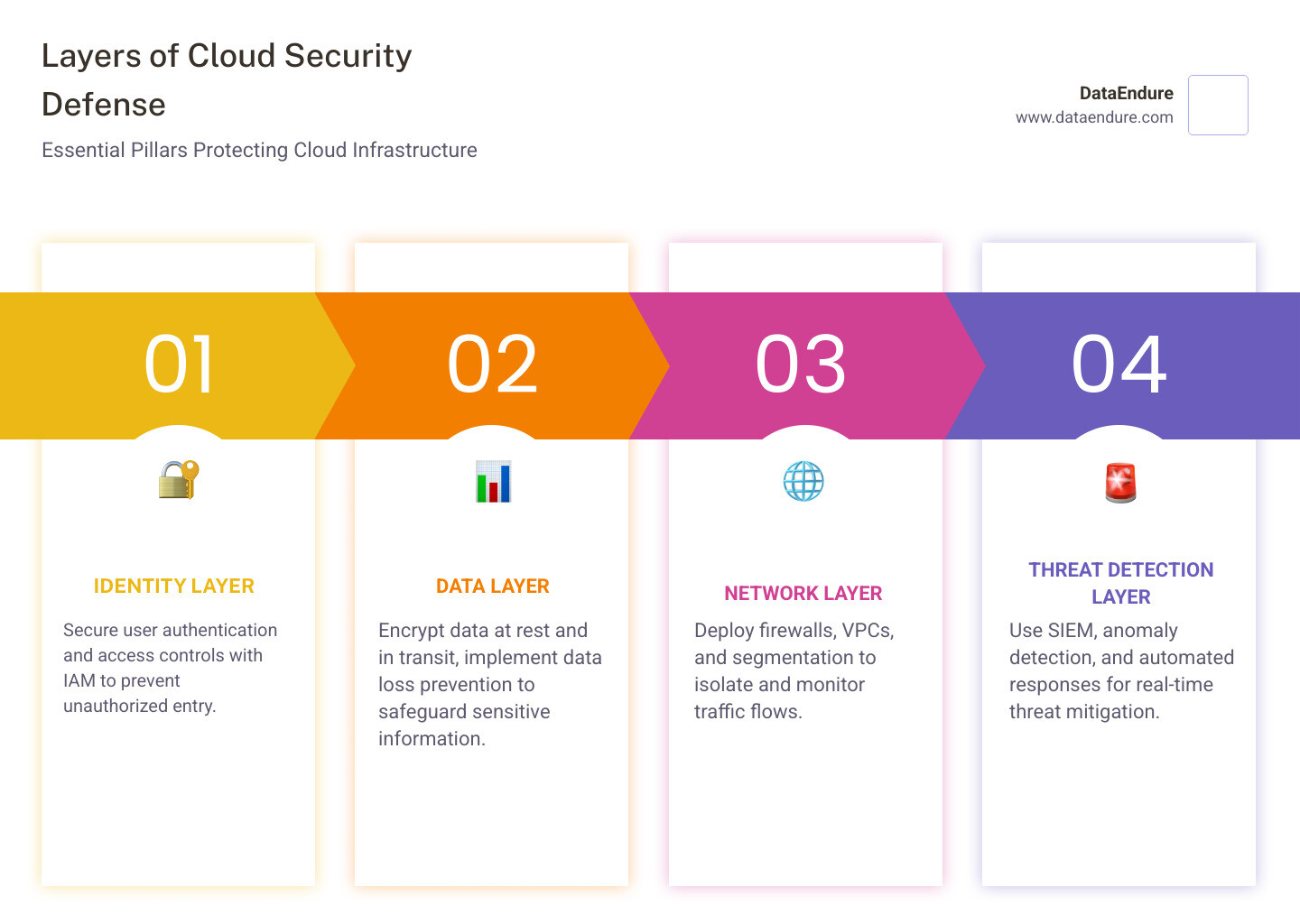
Choosing the Right Cloud Security Course for Your Career

Selecting the right cloud security course depends entirely on where you are in your journey. Are you a “cyber sentinel” just starting out, or a seasoned architect looking to master multi-cloud strategies? The skills gap in our industry is wide, and organizations are desperate for talent that can navigate the complexities of modern infrastructure.
For those in leadership or specialized roles, the Cloud Security Course | Stanford Online offers a high-level academic yet practical approach, focusing on real-world breach analysis and emerging privacy techniques. If your organization is already in the cloud but you’re worried about what you might have missed, starting with a Cloud Security Assessment can help you identify exactly which training gaps your team needs to fill first.
Prerequisites for Your First Cloud Security Course
Before diving into the deep end, beginners should have a solid grasp of fundamental cybersecurity concepts. This includes understanding how networks function, the basics of identity management, and general IT literacy. Many entry-level programs, like the Google Cloud Cybersecurity Professional Certificate, are designed for those with little to no experience, but having a “baseline” of security knowledge will help you move through the material much faster.
What to Expect from an Advanced Cloud Security Course
Advanced courses move beyond “what is the cloud” and dive into “how do we defend it at scale.” You can expect to tackle complex architecture design, incident response strategies that span multiple providers (AWS, Azure, and GCP), and the automation of security controls. These courses often prepare you for high-stakes roles like Cloud Security Architect or Engineer, where you aren’t just following a checklist—you’re building the fortress.
Top Certifications and Platforms for Professional Growth
In April 2026, the landscape for cloud training is more diverse than ever. We’ve seen a massive surge in platform-specific learning. For example, LinkedIn Learning currently hosts 1,718 results for “Cloud Security,” with their “Cybersecurity with Cloud Computing” course alone reaching nearly 100,000 viewers.
If you are located in the Silicon Valley area, local options like CCSK Training in San Jose, California | CSA provide excellent networking opportunities alongside world-class instruction. Whether you choose a global platform or a local intensive, the goal is the same: validation of your expertise. You can learn more about cloud security and how it integrates with managed services to see how these certifications apply in a professional environment.
The CCSP Certification Pathway
The Certified Cloud Security Professional (CCSP) remains the gold standard for vendor-neutral certification. Managed by ISC2, it requires a significant commitment:
- Experience: You generally need five years of cumulative, paid work experience in information technology.
- Domains: The exam covers six critical areas, including Cloud Data Security, Platform Security, and Legal/Risk/Compliance.
- Updates: That exam outlines are periodically updated (the next major shift is slated for August 2026) to reflect new threats like AI-driven attacks.
Specialized Training Platforms
Beyond the big names, specialized platforms offer deep-dive “nanodegrees” and “bootcamps.” The SANS Institute is famous for its intensive SEC510 course, which provides 38 CPE credits and over 50 hands-on labs. Meanwhile, Udacity offers focused tracks for Azure architects, and Google’s professional certificates boast a 96% learner satisfaction rate, making them a safe bet for those wanting to break into the field.
Core Curriculum: From IAM to AI Security
A comprehensive cloud security course must cover the “big three”: Identity and Access Management (IAM), Threat Detection, and Compliance. Without a firm handle on IAM, your cloud environment is essentially an open door. Advanced training like the Azure Cloud Security Best Practices Online Course | Udacity focuses heavily on these identity perimeters, teaching you how to implement Least Privilege and Conditional Access.
For organizations struggling with visibility, Understanding Cloud Access Security Brokers (CASB) is a vital part of the curriculum, as these tools act as the gatekeepers between your users and your cloud applications.
Emerging Topics in Cloud Training
The curriculum is shifting rapidly to include:
- DevSecOps: Integrating security into the CI/CD pipeline so that code is born secure.
- Kubernetes Security: Hardening container orchestration and managing cluster risks.
- Generative AI Protection: Learning how to secure LLMs and prevent prompt engineering attacks.
Compliance and Risk Management
Risk management is no longer just about checking boxes. Modern courses teach you how to map controls to frameworks like NIST CSF, SOC 2, and HIPAA. Understanding the “secret language” of risk—people, process, and technology—is essential. You can find excellent modules on this through Strategies for Cloud Security Risk Management | Coursera, which covers how to use tools like Google’s Security Command Center to automate compliance.
Provider-Specific Training and Hands-on Labs

While general knowledge is great, most of us work in specific environments. This is where provider-specific training shines. Whether it’s the AWS Security Specialty or the Google Cloud Security Engineer track, these courses teach you the exact buttons to push and scripts to run. A popular choice for many is the Security Best Practices in Google Cloud | Coursera, which focuses on GKE hardening and VPC security.
A major theme in these courses is Who Shares the Responsibility for Cloud Security?. If you don’t know where the provider’s job ends and yours begins, you’re bound to leave a gap.
Practical Skills and Interactive Labs
The best courses aren’t just video lectures; they are “sandboxes.” You should look for programs that offer:
- VPC Configuration: Building private networks from scratch.
- Key Management: Using KMS to encrypt data at rest and in transit.
- Container Hardening: Securing Docker images and Kubernetes workloads.
- Breach Analysis: Walking through real-world hacks to see exactly how they happened.
Mastering the Shared Responsibility Model
We cannot stress this enough: the cloud is not “secure by default” for the customer. You are responsible for your data, your users, and your configurations. Advanced training helps you master Who Shares the Responsibility for Cloud Security 2, ensuring you are implementing Infrastructure as Code (IaC) and Policy as Code (PaC) to automate your side of the bargain.
Evaluating the Value: Cost, Duration, and Career Impact
Is a cloud security course worth the investment? Let’s look at the numbers.
| Feature | Free Courses | Paid / Certified Courses |
|---|---|---|
| Cost | $0 (often audit-only) | $300 – $5,000+ |
| Credential | None or basic badge | Professional Certificate / CPEs |
| Hands-on Labs | Limited | Extensive / Immersive |
| Job Support | None | Affiliate employer programs |
| Instructor Access | Peer-reviewed only | Expert-led / Live sessions |
Before spending thousands, it’s a good idea to Check your cloud health to see if your current environment is even ready for advanced implementation.
Free vs. Paid Learning Options
Free options, like the audit versions of Coursera courses or introductory LinkedIn Learning modules, are fantastic for getting your feet wet. However, paid versions unlock the “Final Missions,” graded assignments, and the certificates that recruiters actually look for. If you’re serious about a career move, the investment in a paid program usually pays for itself in the first salary negotiation.
Industry Ratings and Reviews
The data doesn’t lie: Google’s cloud security courses maintain a 4.7-star rating across tens of thousands of reviews. Learners consistently report that these courses gave them the “confidence to deploy” real-world solutions. Employers recognize these credentials because they know the rigor involved in completing 20+ hands-on labs and passing proctored exams.
Frequently Asked Questions about Cloud Security Training
How long does it take to complete a cloud security certification?
It varies by level. A beginner certificate (like Google’s) typically takes 3 to 6 months of part-time study. Advanced certifications like the CCSP or SANS courses can be completed in a week of intensive study, though they require years of prior experience to truly master the material.
What are the best free cloud security courses for beginners?
Coursera offers many courses for free if you choose the “audit” option. Microsoft and AWS also provide extensive “Fundamentals” training for free on their respective learning paths (MS Learn and AWS Skill Builder), which are excellent starting points.
Do I need a degree to start a career in cloud security?
In 2026, the answer is increasingly “no.” While a degree helps, many top employers are prioritizing certifications and hands-on experience. Completing a professional certificate with a strong portfolio of lab projects is often enough to land an entry-level Cloud Security Analyst role.
Conclusion
Training is the first step, but staying secure is an ongoing battle. Even with a well-trained team, the volume of alerts and the speed of modern threats can be overwhelming. That’s where we come in.
DataEndure provides managed cybersecurity solutions that act as an extension of your team. We specialize in rapid breach detection—often finding threats in minutes—and provide the compliance support you need to stay on the right side of regulation. Our experts help reduce alert fatigue, allowing your newly trained staff to focus on high-level strategy while we handle the frontline defense. We can deploy our solutions in as little as 30 days, ensuring your data doesn’t “drift away” while you’re still finishing your syllabus.
Secure your environment with DataEndure Cloud Security and let us help you put your training into practice.