Why Pentest as a Service Is Changing How Organizations Stay Secure
Pentest as a service (PTaaS) is a cloud-based security testing model that combines manual expert-led penetration testing with an always-on platform — giving organizations continuous vulnerability detection, real-time reporting, and on-demand access to skilled testers, without the delays of traditional consulting engagements.
Here’s what PTaaS means at a glance:
- What it is: A subscription or on-demand platform for penetration testing, blending human expertise with automation
- How it works: Testers are matched to your environment and can begin in as little as 24 hours — compared to 3–4 weeks for traditional methods
- What you get: Real-time findings, live dashboards, and remediation guidance during the test — not weeks after
- Who it’s for: Any organization that needs regular, scalable security testing, especially in regulated industries
- Why it matters now: Threats evolve daily. Annual pentests leave gaps that attackers are happy to exploit
If you’re an IT or security leader in a regulated industry, you’ve probably felt this pain: you schedule a penetration test, wait weeks for results, and by the time you’re remediating, your environment has already changed. That’s the core problem PTaaS is built to solve.
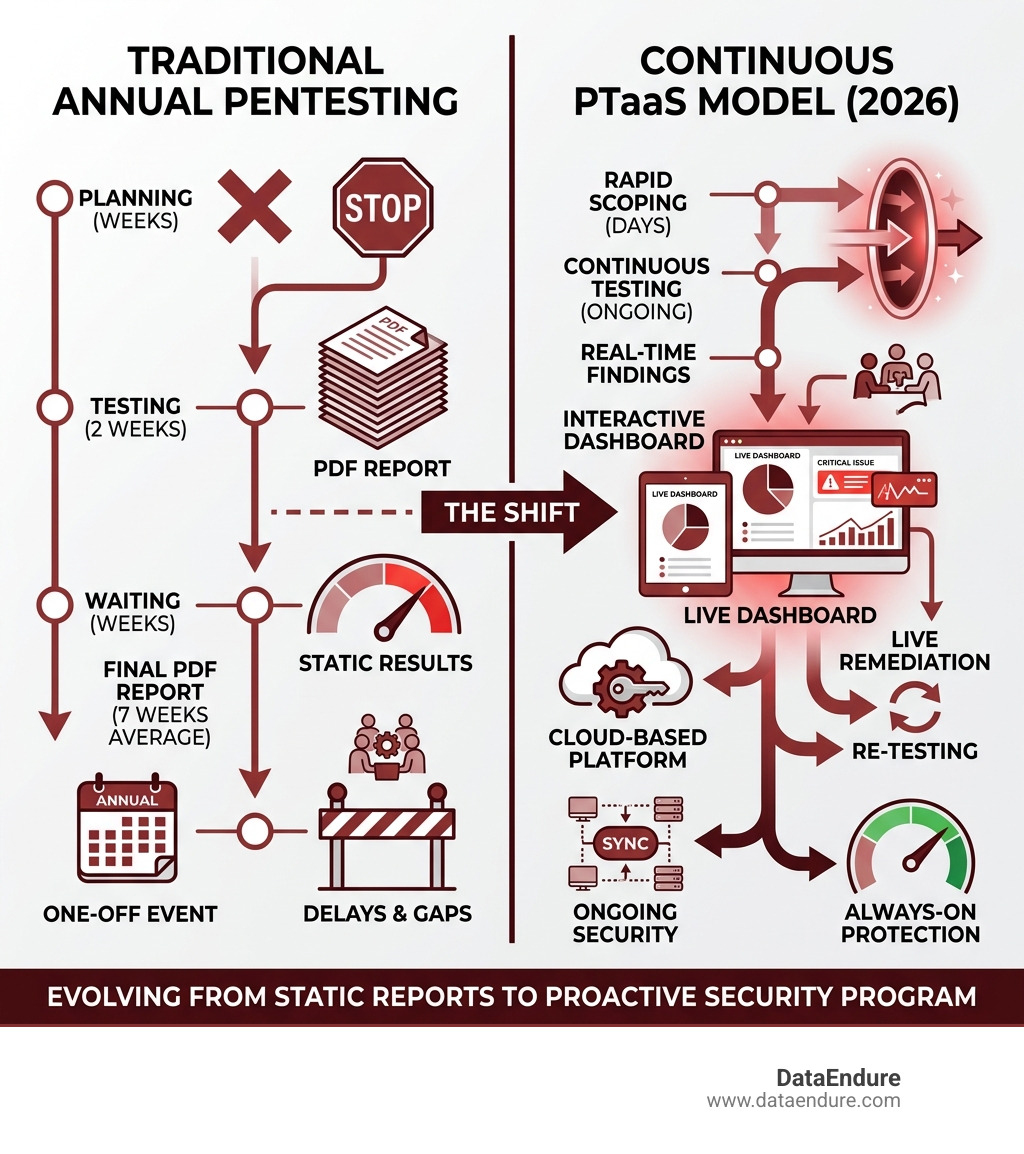
Traditional pentesting was designed for a slower era. Today’s cloud-native, agile environments move too fast for a once-a-year PDF report. In fact, research shows that 77% of IT security professionals don’t receive any findings until the final report — which takes an average of seven weeks to arrive.
Seven weeks. That’s a long time to be in the dark.
PTaaS flips this model on its head by turning penetration testing from a one-off project into an ongoing security program — one that fits inside your existing workflows and keeps pace with how fast your attack surface actually changes.
Defining Pentest as a Service: The Evolution of Security Testing
For years, penetration testing was a “point-in-time” event. You’d hire a consultant, they’d poke around for two weeks, and then hand you a massive PDF that sat on your desk (or in your inbox) until the next year. But in May 2026, the digital landscape is far too dynamic for that. Pentest as a service represents the evolution of this practice, moving from static projects to a platform-driven, continuous model.
At its heart, Penetration Testing as a Service is a delivery platform. It isn’t just about running a scan; it’s about providing an attacker-like perspective on your infrastructure whenever you need it. Unlike traditional consulting, which often feels like a “black box,” PTaaS provides a window into the testing process. You can see what the testers are doing, what they’ve found, and how they found it—all in real-time.

The Hybrid Approach of PTaaS
The secret sauce of pentest as a service is its hybrid nature. It isn’t a choice between robots and humans; it’s both. We use AI-driven automation to handle the heavy lifting—like broad-scale reconnaissance and identifying low-hanging fruit—while human experts focus on the complex business logic that scanners miss.
This approach drastically reduces the “noise” that plagues many security teams. Because human experts validate the findings before they hit your dashboard, you aren’t chasing ghosts or wasting time on false positives. Instead, you get modern security testing insights that are actionable and verified.
Why PTaaS is Crucial in 2026
The threats we face today are smarter and faster than ever. Zero-day vulnerabilities are discovered daily, and cloud complexity in regions like Silicon Valley means that a single configuration change can open a massive hole in your perimeter.
If you only test once a year, you are essentially gambling that no new threats will emerge for the next 364 days. More info about penetration testing reveals that continuous monitoring is the only way to keep up with this drift. PTaaS provides that “always-on” safety net, ensuring that as your environment changes, your defenses are validated right along with it.
PTaaS vs. Traditional Penetration Testing: A Comparative Look
When we compare pentest as a service to the traditional model, the differences are stark. It’s the difference between waiting for a letter in the mail and getting an instant message.
| Feature | Traditional Pentesting | Pentest as a Service (PTaaS) |
|---|---|---|
| Procurement Speed | 3–4 weeks of scoping and contracts | Start in as little as 24 hours |
| Delivery Model | One-off project / PDF report | Continuous platform / Live dashboard |
| Feedback Loop | 7-week average delay for findings | Real-time findings as they are discovered |
| Retesting | Often requires a new contract | Usually included/complimentary |
| Integration | Manual data entry into tickets | Seamless API/Jira/GitHub integration |

Breaking the Annual Testing Cycle
The “annual pentest” is a checkbox exercise that often fails to provide real security. In dynamic environments, “drift” happens—new assets are added, old ones are updated, and permissions are changed. Traditional testing misses this drift.
Organizations using pentest as a service report a 50% reduction in time-to-results compared to traditional engagements. Instead of waiting for a final debrief, your team can start remediating a critical SQL injection the moment the tester confirms it. This speed isn’t just a convenience; it’s a massive reduction in your window of exposure.
Cost-Effectiveness and Scalability
Let’s talk money. Traditional pentests are expensive, often costing between $5k and $20k per engagement. If you need to test multiple times a year, those costs spiral. PTaaS typically uses a SaaS pricing model or a credit-based system, allowing for better resource optimization.
Some companies have saved as much as 20% in costs and 50% in prep time by switching to a platform-based model. Because the platform maintains your history and scoping data, you don’t have to start from scratch every time. You get full-stack coverage—from your web apps to your internal network—without the administrative overhead of managing five different consulting firms.
Integrating Pentest as a Service into DevSecOps and CI/CD
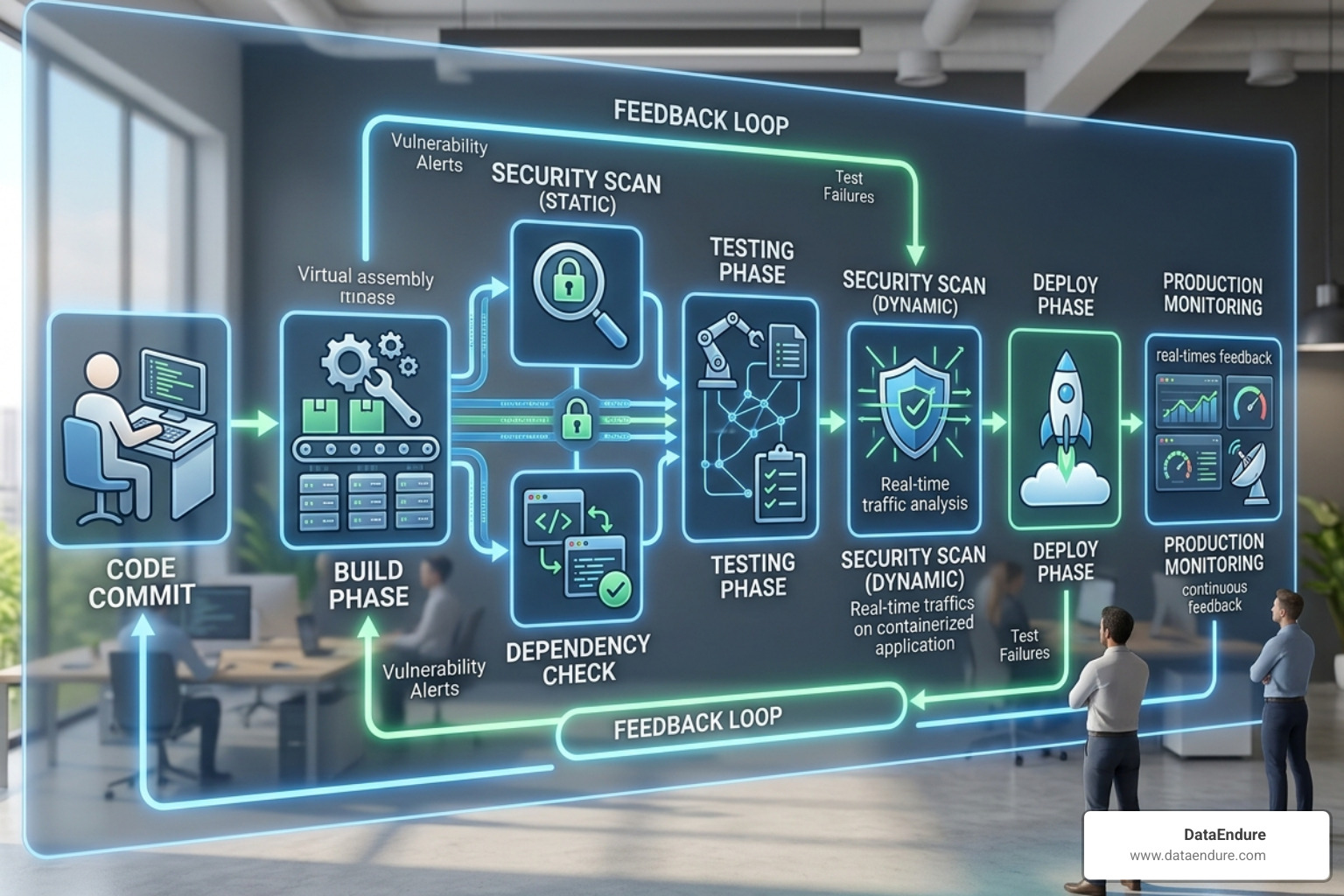
If your developers are moving at the speed of light, your security testing can’t move at the speed of a turtle. This is where pentest as a service truly shines. It is built to live inside the DevSecOps pipeline, not outside of it.
Real-Time Collaboration and Remediation
One of the biggest hurdles in security is the “wall” between security researchers and developers. PTaaS breaks this wall down. Modern platforms offer direct integrations with tools your team already uses.
Imagine a tester finds a vulnerability. Instead of an email, a ticket is automatically created in Jira or synced with GitHub. Your developers can chat directly with the tester via Slack to understand the exploit. This collaboration significantly lowers the “mean time to fix,” turning security from a roadblock into a streamlined part of the workflow. For those looking for expert-driven modern pentesting solutions, this level of integration is a game-changer.
Continuous Visibility for Security Teams
For leadership, the benefit is visibility. You don’t have to ask, “How is the pentest going?” You just log into the dashboard. You can see trend analysis, identify root causes (like a recurring lack of input validation), and pull executive summaries for the board at the click of a button. Our expertise in security and compliance shows that when you can see the data in real-time, you make better strategic decisions.
The Lifecycle of a Pentest as a Service Engagement
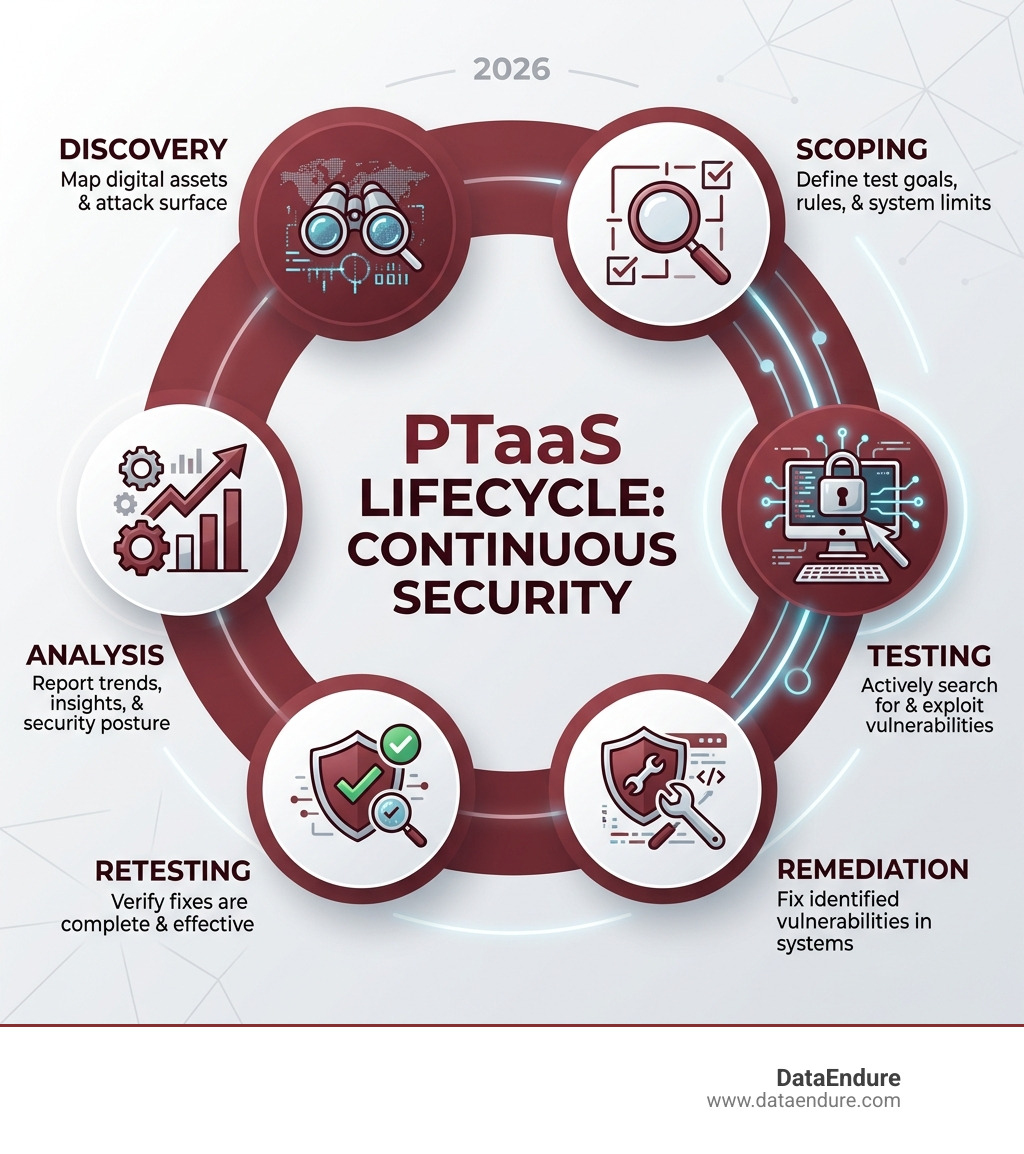
The lifecycle of a PTaaS engagement is designed for speed and agility. Unlike traditional models that get bogged down in administrative red tape, PTaaS follows a streamlined path.
Planning and Reconnaissance
It all starts with knowing what you have. PTaaS platforms often include attack surface management tools that help with asset discovery. Before a single exploit is attempted, we work with you to define the technical context and risk profile of your assets. This ensures the testing is focused where it matters most, rather than wasting time on low-risk systems.
Testing, Reporting, and Retesting
Once the testing begins, it’s a flurry of activity. Ethical hackers (often holding certifications like OSCP or OSWE) use manual chaining—combining small bugs to create a larger exploit—to see how deep an attacker could go.
As findings are verified, they appear on your dashboard with injectable payloads and proofs of concept. But the process doesn’t end when the report is “finished.” Most PTaaS providers offer complimentary retesting. Once your team applies a fix, you simply click a button, and the tester verifies the remediation. This 6-month or 12-month validation window ensures that your “fixes” actually work.
PTaaS for Compliance and Continuous Threat Exposure Management (CTEM)
Compliance is often the “why” behind a pentest, but it shouldn’t be the only reason. Whether you are aiming for SOC 2, ISO 27001, GDPR, or PCI DSS, modern PTaaS platform features make the audit process significantly less painful.
Supporting the CTEM Framework
Continuous Threat Exposure Management (CTEM) is the modern standard for security. It’s a five-stage framework: Scoping, Discovery, Prioritization, Mobilization, and Diagnostic Testing. Pentest as a service is the perfect engine for the “Diagnostic Testing” and “Prioritization” phases. It moves your organization away from ad-hoc testing toward a mature security posture where vulnerabilities are managed as part of a continuous cycle.
Meeting Regulatory Requirements in 2026
In 2026, regulators are looking for more than just a “passed” report from last October. They want to see that you have a proactive process for managing risk. PTaaS provides audit-ready reports and stakeholder transparency that prove you are monitoring your environment year-round.
Even when dealing with third-party restrictions—like the specific authorization windows required by AWS—PTaaS platforms help manage those permissions and data handling requirements seamlessly, ensuring you stay compliant without the headache.
Frequently Asked Questions about PTaaS
How does Pentest as a Service differ from a vulnerability scanner?
A scanner is an automated tool that looks for known signatures. It’s great for finding missing patches, but it can’t understand business logic. For example, a scanner won’t realize that one user can see another user’s private data through a URL manipulation. Pentest as a service uses scanners for speed but relies on human experts to find those complex, high-risk logic flaws.
Can PTaaS help my organization achieve SOC 2 or ISO 27001 compliance?
Absolutely. Most frameworks require regular security testing. PTaaS not only satisfies the requirement for a “penetration test” but also provides the documentation and remediation evidence that auditors love to see. It proves that you don’t just find bugs—you fix them.
How quickly can a PTaaS engagement typically begin?
While traditional firms might take 3 to 4 weeks to get you on the schedule, many PTaaS platforms allow you to launch an engagement in as little as 24 hours. Because the “pool” of vetted testers is global and managed through the platform, the bottleneck of “consultant availability” is largely removed.
Conclusion
The shift toward pentest as a service is more than just a trend; it’s a necessary response to a faster, more dangerous digital world. By moving away from the static, “once-a-year” model, organizations can finally align their security testing with the speed of their business.
At DataEndure, we understand that security isn’t just about finding holes—it’s about closing them before they can be exploited. As a leader in managed cybersecurity solutions in Santa Clara and Silicon Valley, we specialize in rapid breach detection and compliance support. Our approach reduces alert fatigue and focuses on what matters: protecting your data. Whether you’re looking to meet a strict compliance deadline or build a robust CTEM framework, we can help you deploy in as little as 30 days.
Ready to see how continuous testing can transform your security posture? Get started with professional penetration testing today and stop the threats before they start.