The Fastest Way to Find the Right Cyber Security Risk Assessment Tool
A cyber security risk assessment tool helps organizations identify, prioritize, and manage threats before they become breaches. Here are the top options covered in this guide:
| Tool Type | Best For | Key Strength |
|---|---|---|
| GRC Platforms (e.g., CISO Assistant) | Compliance-driven teams | Multi-framework mapping |
| Vulnerability Scanners (e.g., Tenable, Qualys) | Technical security teams | Real-time asset scanning |
| Security Ratings (e.g., Bitsight) | Third-party risk management | Continuous external monitoring |
| Government Tools (e.g., HHS SRA, CISA CSET) | Healthcare & public safety | Free, framework-aligned |
| Open-Source Tools (e.g., CyberRisk Canvas) | Budget-constrained SMEs | Self-hosted, customizable |
With the increasing complexity of modern IT environments and a significant portion of data breaches involving cloud-based assets, organizations require structured methods to identify and manage vulnerabilities. Tracking these risks across manual spreadsheets or disconnected tools can lead to operational challenges, such as alert fatigue and outdated risk data.
This guide provides an objective overview of the primary categories of risk assessment tools available in 2026—including free, commercial, open-source, and enterprise options—to help organizations evaluate which approach best aligns with their operational and compliance requirements.
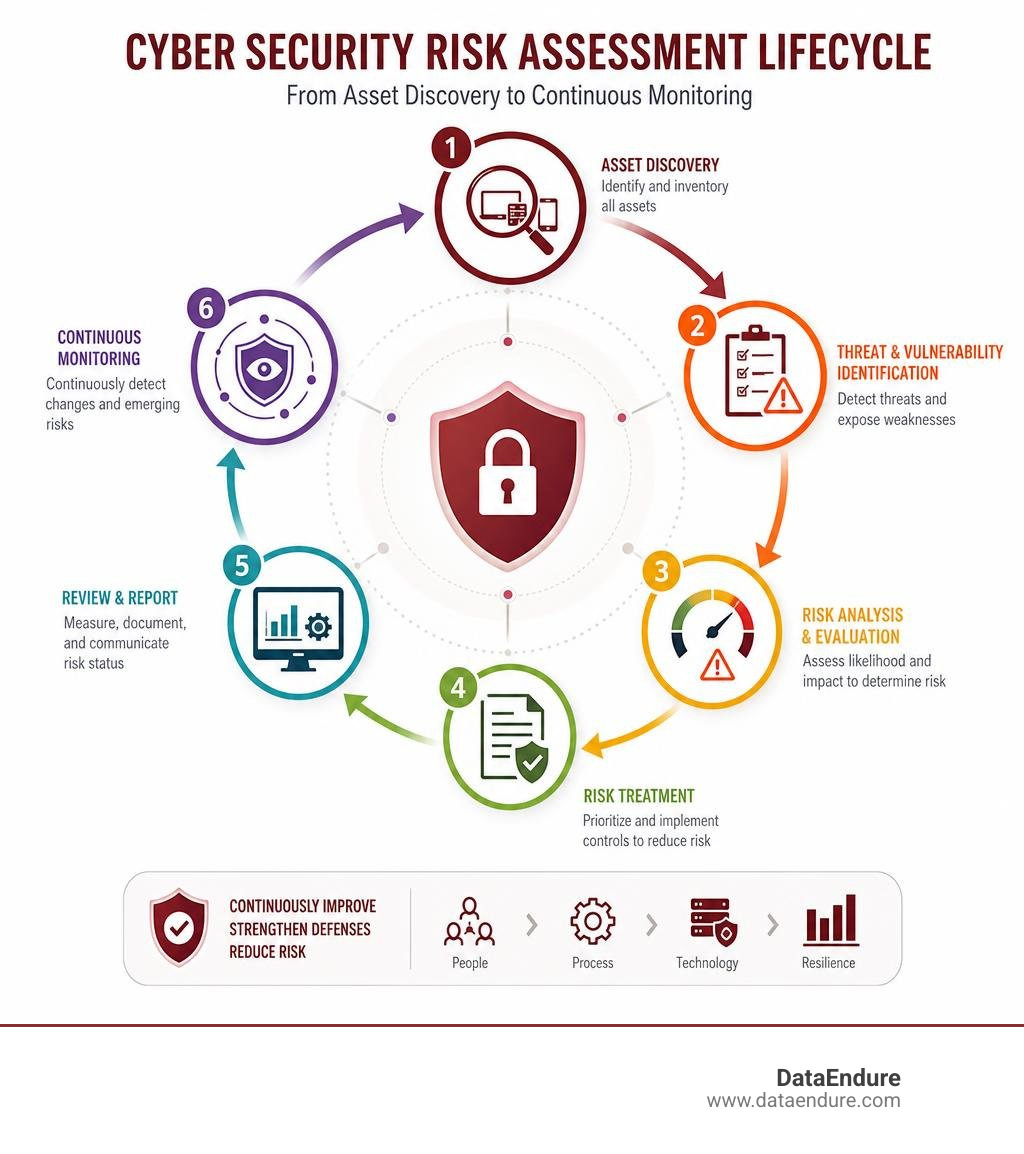
Cyber security risk assessment tool definitions:
What is a cyber security risk assessment tool and Why Do You Need One?
At its core, a cyber security risk assessment tool is a software application or platform designed to discover, evaluate, and assess potential digital vulnerabilities across your organization’s endpoints, networks, applications, and cloud environments. But it does more than just find flaws; it calculates the real-world business impact of those flaws.
By analyzing the likelihood of a threat exploiting a vulnerability and matching it with the potential business impact, these tools allow security teams to transition from defensive firefighting to strategic, risk-based decision-making.
Why is this essential in July 2026? Consider the sheer volume of data we manage. With cloud-based data accounting for the source of breaches in 82% of cases, traditional perimeter security is no longer sufficient. Organizations are highly distributed, relying on complex supply chains and multiple cloud providers.
Without a structured tool, risk identification can become difficult to scale. While manual tracking in spreadsheets may be feasible for very small environments, it becomes increasingly challenging when managing dynamic cloud instances, remote endpoints, and third-party vendors. Implementing a dedicated tool helps an organization to:
- Gain Unified Visibility: Eliminate blind spots across IT, operational technology (OT), and emerging AI infrastructure.
- Optimize Resource Allocation: Focus your limited budget and manpower on mitigating high-risk issues rather than chasing low-priority alerts.
- Reduce Post-Breach Impacts: Mitigating vulnerabilities proactively is exponentially cheaper than managing the aftermath of a public data breach, regulatory fines, and reputational damage.
To build a foundational understanding of how these assessments fit into your broader defense, take a look at our guide on A Quick Start Guide to Cyber Risk Assessment or read the industry perspective on What Is a Cybersecurity Risk Assessment? to see how modern enterprises frame their threat landscapes.
Key Features to Look For in a Cyber Security Risk Assessment Tool
When selecting a cyber security risk assessment tool, the goal is to find a platform that aligns with your operational realities rather than adding to your team’s administrative burden. A tool that is too complex will simply sit on the shelf, while one that is too simplistic will leave critical gaps.
Core Capabilities of an Enterprise cyber security risk assessment tool
For mid-market and enterprise organizations, a modern risk assessment tool must possess three core technical capabilities:
- Continuous Asset Discovery: You cannot secure what you do not know exists. The tool must dynamically map your entire attack surface—including shadow IT, cloud environments, and remote endpoints—rather than relying on static, manual asset logs.
- Context-Aware Risk Scoring: A vulnerability on a public-facing web server carrying customer data is vastly more critical than the same vulnerability on an isolated testing machine. The ideal tool uses dynamic risk scoring (often leveraging the CIA triad of Confidentiality, Integrity, and Availability) to prioritize remediation based on business context.
- Threat Intelligence Integration: The platform should pull in real-time global threat feeds to understand which vulnerabilities are actively being exploited in the wild by threat actors.
To understand how technical scanning matches up with real-world exposure, many organizations pair their risk tool selection with a comprehensive Vulnerability Assessment to establish an initial baseline.
The Role of Automation and AI in Modern Risk Assessment
Automation plays an increasingly important role in modern risk management. Currently, 83% of IT leaders consider workflow automation integral to their digital transformation efforts, and 48% of organizations already deploy automation to streamline manual security tasks.
Modern platforms leverage “agentic” risk management and AI-assisted threat mapping. Instead of requiring a security analyst to manually research a vulnerability and map it to a compliance control, AI-driven engines can automatically analyze your system architecture, identify potential STRIDE-based threat vectors, and suggest remediation steps.
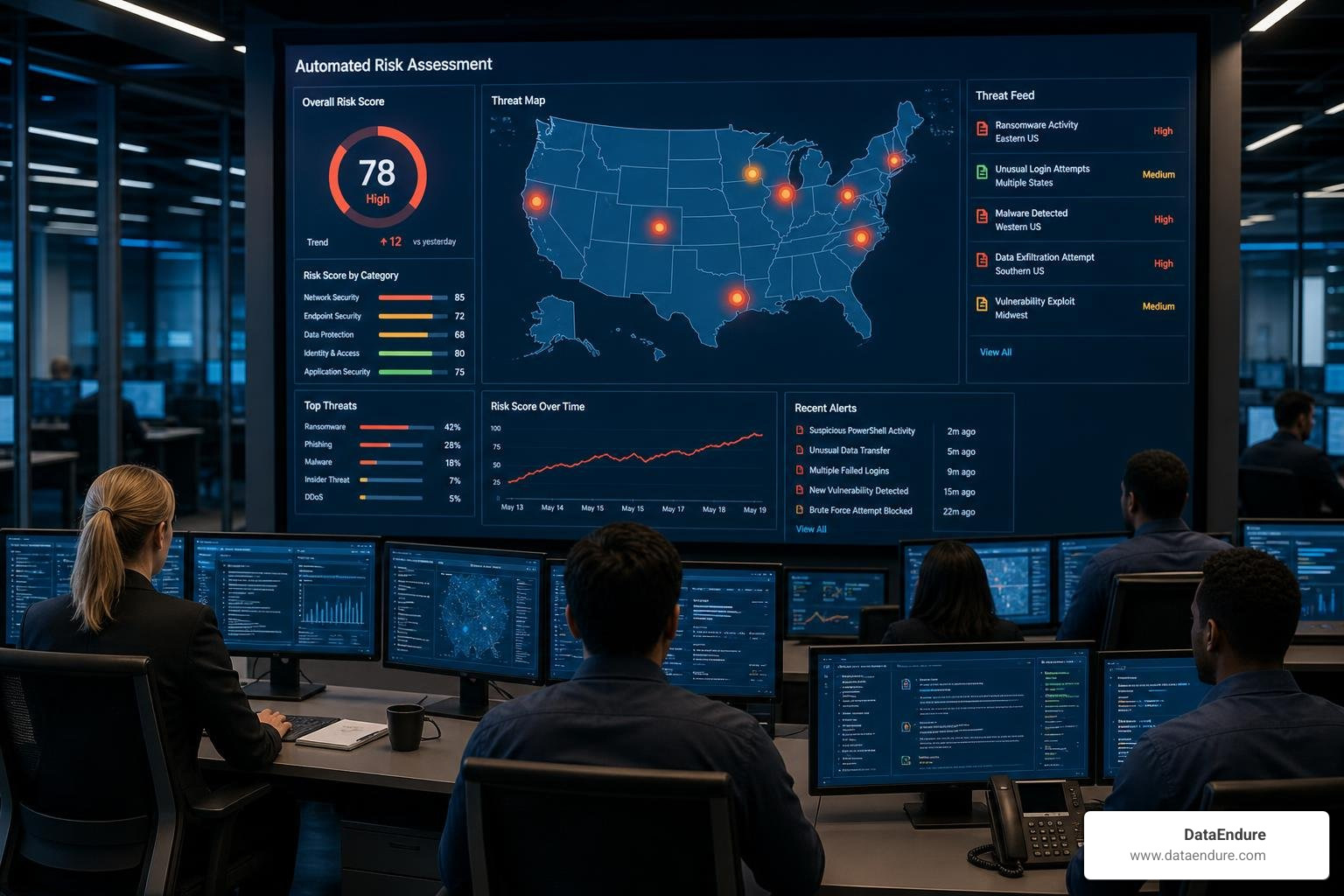
This level of automation drastically reduces the time required to build and maintain a corporate risk register. It ensures that security posture updates are delivered in near-real-time, allowing leadership to make proactive decisions before a vulnerability can be weaponized.
Comparing Types of Cyber Security Risk Assessment Tools
Not all risk tools are built for the same purpose. Understanding the differences between the major categories is crucial to avoiding redundant software purchases and tool sprawl.
Vulnerability Scanners vs. GRC Platforms vs. Security Ratings
To build a balanced security program, you must understand how different classes of tools evaluate your posture:
| Capability | Vulnerability Scanners | GRC Platforms | Security Ratings |
|---|---|---|---|
| Primary Focus | Technical flaws & missing patches | Compliance, policies, & risk registers | External security posture & third-party risk |
| Assessment Model | “Inside-Out” (Deep credentialed scans) | Document-driven & self-attestation | “Outside-In” (Non-intrusive external scanning) |
| Data Evaluated | Ports, protocols, software versions | Controls, framework mappings, policies | Compromised systems, diligence records, public leaks |
| Frequency | Scheduled or continuous | Periodic or event-driven updates | Continuous daily scoring |
| Best Use Case | Patch management & system hardening | Audit readiness & regulatory compliance | Vendor risk management & board reporting |
For example, platforms like Bitsight monitor over 540,000 organizations and ingest more than 400 billion events daily, providing an objective “outside-in” score (ranging from 250 to 900) similar to a credit rating. While this is highly effective for evaluating third-party vendor risk, it cannot replace the deep technical insights of an internal vulnerability scanner or the policy-level governance of a GRC platform.
Open-Source vs. Commercial cyber security risk assessment tool Options
For organizations balancing strict budget constraints, open-source risk assessment tools offer an attractive, highly customizable alternative to expensive enterprise software.
- CISO Assistant: This popular open-source GRC tool stands out for its unique “decoupling principle.” By separating control implementation from compliance tracking, it allows teams to evaluate a single scope against multiple frameworks simultaneously (e.g., ISO 27001 and NIST CSF) without duplicating work.
- CyberRisk Canvas: Built for connected products, OT, and IoT environments, this tool offers a visual architecture canvas that allows teams to map threat scenarios and link them directly to regulatory standards like IEC 62443 or the EU Cyber Resilience Act (CRA).
- Open Risk Register: A completely free, local-first browser tool designed specifically for SMEs mapping to the European NIS2 Directive. Because it runs entirely in the browser and saves data in
localStorage, your sensitive risk data never leaves your machine.
While these tools are incredibly powerful for hands-on engineering and IT teams, they lack the automated evidence collection, continuous threat monitoring, and dedicated support found in enterprise GRC platforms. Deciding between these routes requires an honest assessment of your internal resources. For a deeper look at making this decision, check out our guide on How to Choose a Cyber Security Assessment Service Without Losing Your Mind.
Achieving Compliance and Integrating Risk Tools into Your Strategy
A risk assessment tool should not operate in a vacuum. To deliver maximum business value, it must be integrated directly into your corporate governance, compliance workflows, and daily operational security strategies.
Mapping Assessments to HIPAA, NIST, PCI DSS, and GDPR
For organizations in regulated sectors, a primary driver for using a cyber security risk assessment tool is achieving and maintaining compliance. Modern GRC platforms and assessment tools provide pre-built templates that automatically map your security controls to major frameworks:
- HIPAA Security Rule: Covered entities must conduct a formal, documented risk analysis. The official Security Risk Assessment Tool – ONC is a free, offline Windows and Excel tool designed to help small-to-medium healthcare providers systematically review administrative, physical, and technical safeguards.
- NIST SP 800-30: This federal standard provides the definitive methodology for conducting risk assessments, guiding organizations through identifying threat sources, scoring likelihood, and calculating business impact.
- GDPR & NIS2: European regulations mandate rigorous risk management and security-by-design. Tools like the Free NIS2 Risk Assessment Tool help SMEs build a structured risk register mapped directly to NIS2 Article 21 requirements.
By utilizing a tool that auto-maps controls across multiple frameworks, you can “assess once, comply many times,” significantly reducing the administrative burden of audit preparation. To understand where your current controls fall short of these strict standards, we recommend reviewing The Complete Guide to Compliance Gap Analysis.
Continuous Monitoring vs. One-Time Assessments
Historically, organizations treated risk assessments as a yearly check-the-box exercise. A consultant would perform an audit, hand over a 200-page PDF, and the IT team would spend the next six months trying to fix outdated issues.
In a rapidly changing technology landscape, point-in-time assessments can quickly become outdated. Because new vulnerabilities are disclosed regularly and cloud configurations change frequently, continuous monitoring is often utilized to maintain an accurate understanding of an organization’s risk posture.
By transitioning to a continuous model, your security team receives real-time updates when an asset’s configuration drifts, when a new critical vulnerability is detected, or when a third-party vendor’s security rating drops. To evaluate your current baseline rapidly, we offer a specialized Security Health Check that bridges the gap between static audits and continuous visibility.
Overcoming Implementation Challenges and Benchmarking Success
Implementing a new risk assessment tool is not without its hurdles. Many organizations fall into the trap of “tool sprawl”—buying multiple niche scanners and GRC platforms without integrating them. This leads to massive alert fatigue, where security analysts are inundated with thousands of raw vulnerability alerts without any business context to prioritize them.
To avoid this, organizations should follow a structured risk mitigation workflow:
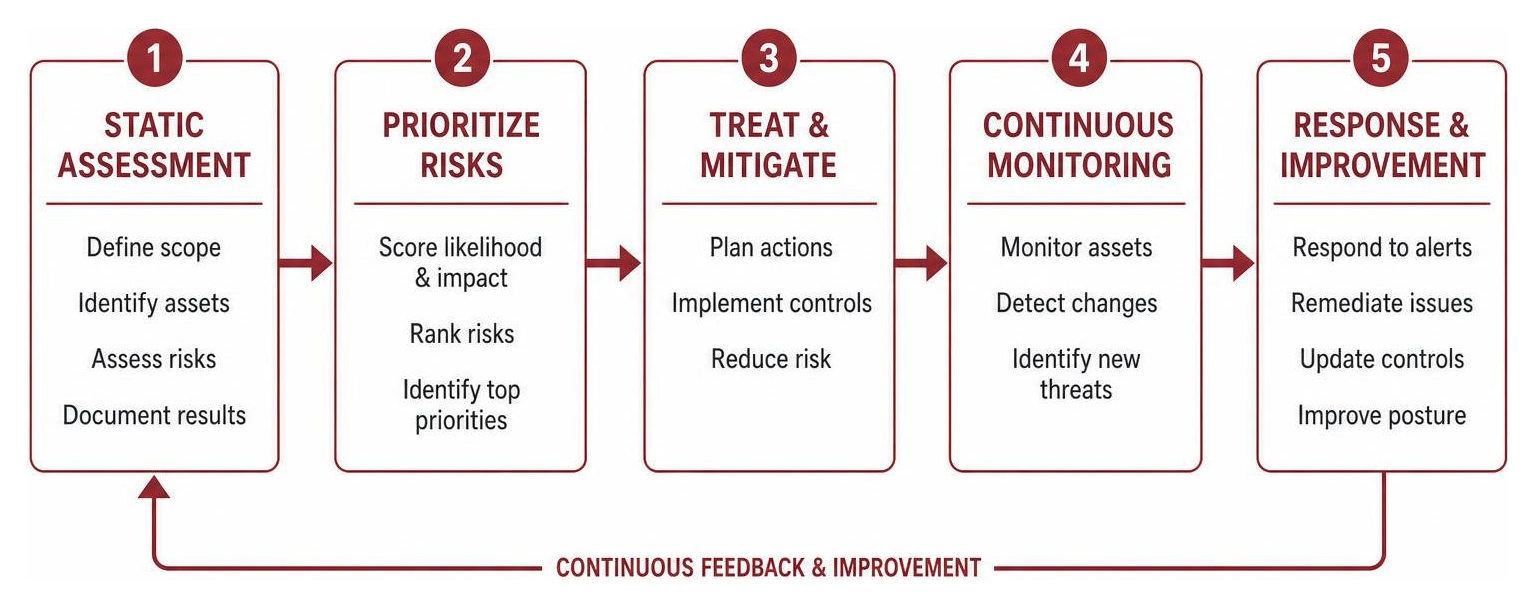
To benchmark the success of your tool over time, track metrics that reflect actual risk reduction rather than just the number of scans run:
- Mean Time to Remediate (MTTR): How fast does your team patch critical vulnerabilities once they are identified?
- Vulnerability Re-exposure Rate: Are previously patched flaws reappearing due to poor configuration management?
- Compliance Drift: How often do your active configurations fall out of alignment with your target frameworks?
Frequently Asked Questions about Cyber Risk Assessments
What is the difference between a vulnerability assessment and a risk assessment?
A vulnerability assessment is a technical scan designed to identify and catalog known security weaknesses (like unpatched software or open ports) on your systems. A risk assessment takes those findings and adds business context. It analyzes the likelihood of a threat exploiting those vulnerabilities, the existing controls in place to prevent it, and the financial or operational impact on the organization if a breach occurs.
To validate whether those technical vulnerabilities can actually be exploited in your unique environment, organizations often follow up their assessments with targeted Penetration Testing.
How often should our organization perform a cybersecurity risk assessment?
While compliance frameworks like HIPAA or PCI DSS may only mandate an annual assessment, best practices dictate that risk analysis should be an ongoing, dynamic process. You should trigger an immediate risk assessment review whenever major operational changes occur, such as migrating to a new cloud provider, deploying a new enterprise application, or undergoing an organizational merger.
For leadership teams looking to establish a formal cadence and strategic roadmap, our structured CISO Assessment provides executive-level guidance on aligning security posture with business goals.
Can open-source risk assessment tools replace commercial GRC platforms?
For startups, small-to-medium businesses, or highly technical engineering teams, open-source tools like CISO Assistant or CyberRisk Canvas are incredibly capable. They offer excellent customization and allow you to avoid vendor lock-in. However, for large enterprises or highly regulated organizations, open-source tools often require significant manual effort to maintain, lack automated API integrations with cloud environments, and do not provide the continuous, managed support needed to combat modern threats at scale.
Conclusion
Selecting the right cyber security risk assessment tool is an important step, but the tool itself is most effective when supported by a clear strategy. Managing tool sprawl, alert fatigue, and administrative overhead is essential to ensure that software deployments deliver long-term value.
Ultimately, successful risk management relies on aligning technology with organizational processes and compliance requirements. For organizations seeking to evaluate their current posture and establish a baseline, utilizing structured evaluations like a Complimentary Security Review or a comprehensive Network Assessment can provide valuable insights into potential areas of improvement.