Why the 4 Risk Management Strategies Matter More Than Ever in 2026
The 4 risk management strategies every organization needs to know are:
- Risk Avoidance – Eliminating the activity or exposure entirely
- Risk Reduction – Lowering the likelihood or impact through controls
- Risk Transfer – Shifting financial consequences to a third party
- Risk Acceptance – Deliberately retaining a risk within your tolerance level
These four strategies form the foundation of every major risk framework, including ISO 31000 and COSO ERM. Selecting the appropriate strategy—or combination of strategies—helps organizations align their operational activities with their overall risk tolerance.
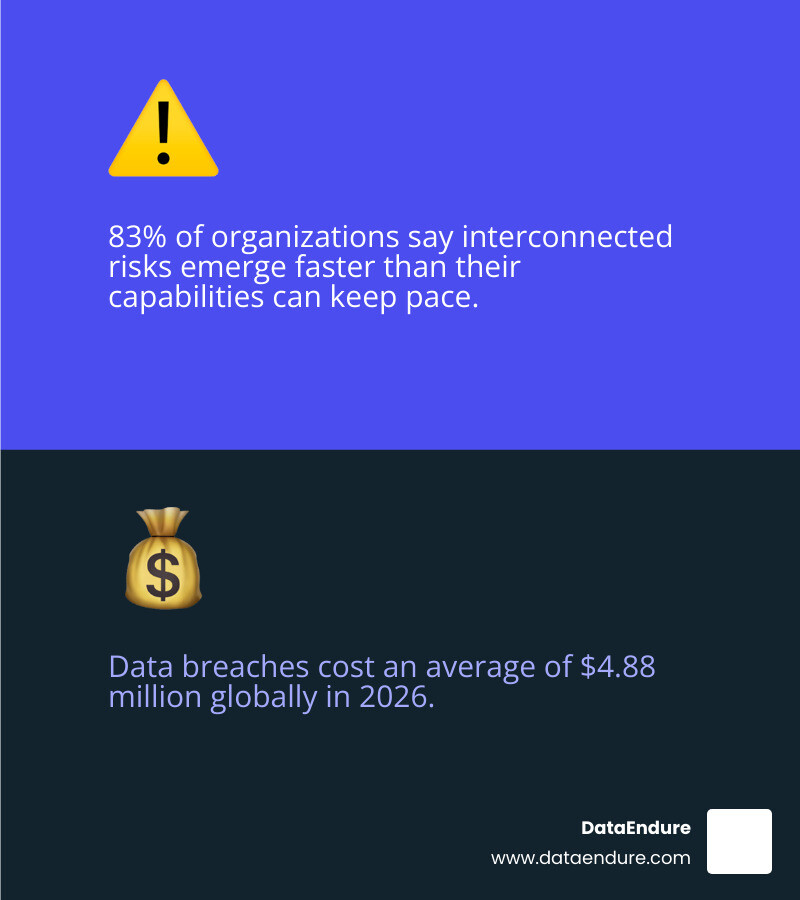
In 2026, managing interconnected risks remains a key priority for organizations. Industry data indicates that 83% of businesses find emerging risks challenging to address within their existing risk management capabilities, while 72% report a need to update their risk programs to keep pace with evolving threats. With the global average cost of a data breach reaching $4.88 million, establishing a structured approach to risk is an important element of operational planning.
For IT and business leaders balancing compliance requirements and resource constraints, understanding these four strategies provides a clear framework for decision-making.
This guide breaks down each strategy, providing objective examples and a practical framework for deciding which approach to apply in different scenarios.
Why Modern Organizations Struggle with Evolving Threats
Modern risk management has evolved beyond annual compliance checklists. In 2026, organizations operate in an environment characterized by rapid technological adoption, cloud integration, and the widespread use of emerging technologies like generative AI.
Statistical trends highlight the ongoing challenges in managing these environments. Reports indicate that 56% of organizations encounter active security events weekly, and 79% experience them monthly. The financial implications are also notable; while the global average cost of a data breach is $4.88 million, the average cost in the United States is estimated at $10.22 million. Significant security incidents can lead to substantial operational disruptions across various sectors, including healthcare and financial services.
Managing these risks can be complicated by operational complexities, such as utilizing multiple disconnected security tools. This can lead to high volumes of alerts, making it more difficult for teams to identify and prioritize critical issues.
To address these challenges, organizations are increasingly adopting proactive risk management frameworks that integrate governance with security operations. For a deeper dive into modern compliance and governance trends, explore the comprehensive Governance, Risk Management, and Compliance Guide 2026.
Moving toward dynamic risk assessment models helps organizations maintain better visibility over their risk posture. To explore the strategic framework of modern risk further, check out Risk Management Strategies For Organizations: The 2026 Guide.
The 4 Risk Management Strategies Every Leader Must Know
Before we dive into the operational mechanics, let’s establish a common taxonomy. Historically, risk management professionals have categorized risk treatment into four primary options. While some frameworks introduce a fifth option—such as “risk sharing” or “contingency planning”—the core of any robust program relies on the standard four.
The table below outlines how these 4 risk management strategies function under international standards like ISO 31000 and COSO ERM:
| Strategy | Definition | Primary Objective | Best Used For |
|---|---|---|---|
| Avoidance | Completely eliminating the risk by halting the associated activity. | Zero exposure to the threat. | High-impact, high-likelihood risks with no viable business benefit. |
| Reduction | Implementing controls to lower the likelihood or impact of a risk. | Bringing residual risk within tolerance levels. | Core operational processes and high-value business activities. |
| Transfer | Shifting the financial or operational impact to a third party. | Minimizing direct financial loss. | Low-likelihood, catastrophic-impact risks (e.g., natural disasters). |
| Acceptance | Consciously retaining the risk without active mitigation. | Documented alignment with risk appetite. | Low-impact risks or uninsurable, unavoidable systemic risks. |
To help your team systematically categorize and track these options, you can download a practical 4 Types of Risk Management Strategies Template | Free Word Download to map your current exposures against these four pillars.
Let’s look at how each of these 4 risk management strategies works in practice.
1. Risk Avoidance: Eliminating Exposure Entirely
Risk avoidance is the most underused strategy in corporate portfolios. It involves making a deliberate decision to completely refrain from an activity, or to radically change a process, to ensure a specific risk cannot materialize.
For example, if a business in Santa Clara decides not to enter a foreign market due to geopolitical instability and unfamiliar local regulations, that is risk avoidance. In the IT realm, risk avoidance often looks like:
- Decommissioning legacy systems: Shutting down an outdated database server that contains personal data but is no longer patchable.
- Banning high-risk software: Prohibiting the use of unvetted, consumer-grade generative AI tools (shadow AI) that expose corporate intellectual property to public models. (Shadow AI usage adds an average of $670,000 to the cost of a data breach).
- Process redesign: Refusing to store customer credit card details on-site, opting instead to route all transactions through a fully outsourced, PCI-compliant payment gateway.
While avoidance is highly effective at neutralizing threats, it comes with a major catch: it also eliminates the potential business opportunities associated with that activity. If you avoid all risk, you avoid all growth.
To strike the right balance between playing defense and fueling innovation, read the guide on 8 Tips for Smarter Risk-Taking in IT.
2. Risk Reduction: Mitigating Likelihood and Impact
Risk reduction (often referred to as risk mitigation) is the most common operational strategy. It assumes that the business activity is too valuable to avoid, so the organization must implement controls to lower either the probability of an incident occurring, or the damage it causes if it does.
A balanced risk reduction strategy relies on two types of controls:
- Preventive Controls: Measures designed to stop an incident before it starts. Examples include multi-factor authentication (MFA), regular vulnerability scanning, continuous employee security awareness training, and physical access restrictions.
- Impact-Limiting Controls: Measures designed to limit the damage once an incident occurs. Examples include automated off-site backups, network segmentation, and rapid breach detection.
Effective risk reduction in cybersecurity generally relies on maintaining clear visibility across the IT environment and establishing efficient response protocols. Organizations often face challenges when managing multiple disconnected security tools, which can lead to fragmented visibility and operational inefficiencies.
Adopting a structured, layered defense model helps streamline security operations and reduce the complexity associated with tool sprawl. This approach supports more consistent monitoring and faster incident identification, helping to minimize potential operational impacts.
Before implementing specific reduction measures, establishing a clear baseline of existing vulnerabilities is an important first step. You can establish a baseline by following the A Quick Start Guide to Cyber Risk Assessment.
3. Risk Transfer: Shifting Financial Consequences
Risk transfer involves shifting the financial burden or operational responsibility of a risk to an external party. The most common mechanism for risk transfer is purchasing cyber liability or business interruption insurance. Other methods include contractual agreements, such as indemnification clauses, and outsourcing IT operations to specialized vendors.
However, a critical misunderstanding persists among business leaders regarding risk transfer: you can never outsource ultimate accountability.
While an insurance policy can help cover the financial fallout of a ransomware attack, and a cloud host’s SLA might guarantee server uptime, neither can restore a ruined reputation or repair broken customer trust. Under strict modern frameworks like GDPR and California’s privacy laws, the data controller remains legally responsible for customer information, regardless of who was hosting the database when it leaked.
To understand how high-performing companies balance insurance with actual operational defenses, read about the 4 risk treatment strategies that separate proactive businesses from reactive ones – AOL.
4. Risk Acceptance: Conscious Retention of Residual Risk
Risk acceptance occurs when an organization evaluates a risk and decides to tolerate it without active mitigation. This is often the most cost-effective approach when the cost of implementing a control exceeds the potential financial loss of the risk itself.
There are two ways to accept risk, and only one of them is professionally defensible:
- Passive Acceptance (Unmanaged Risk): Tolerating a risk simply because you don’t know it exists, or because alert fatigue has buried it in your backlog. If you cannot point to a specific, documented reason in your risk register for tolerating a threat, you are practicing passive acceptance.
- Active Acceptance (Contingency Planning): A deliberate, board-approved decision to accept a risk, backed by a documented contingency plan. For instance, a Silicon Valley startup might accept the risk of minor, non-critical system downtime during initial product development to save on high-availability infrastructure costs. However, they maintain a clear disaster recovery plan to quickly restore services if an outage occurs.
To learn more about structuring your risk registry to ensure every accepted risk is actively tracked, consult Risk Management Strategies: A Practical Guide.
How to Choose and Operationalize the Right 4 Risk Management Strategies
Selecting the right strategy is not a matter of guesswork. It requires a structured, quantitative decision framework that aligns technical realities with business goals.
To move past subjective, qualitative “red-amber-green” heat maps, mature organizations use a systematic two-step process to evaluate and prioritize threats.
Step 1: Aligning 4 Risk Management Strategies with Risk Appetite
Your risk appetite is the baseline threshold of risk your organization is willing to accept in pursuit of its strategic goals. To make this operational, you must establish Key Risk Indicators (KRIs) that trigger immediate escalation when breached.
This alignment requires close collaboration between IT leadership and executive management. Boards of directors are increasingly being held legally accountable for cybersecurity oversight, making clear communication essential.
To bridge the gap between technical metrics and board-level concerns, refer to the Cyber Risk Questions Boards Should Be Asking.
Step 2: Evaluating Feasibility and Cost of the 4 Risk Management Strategies
Once you have mapped your risks, you must evaluate the feasibility of your treatment options. This is where the principle of Alignment Over Complexity becomes vital.
Too often, organizations try to solve risk by purchasing more security tools. This can lead to tool sprawl, which increases operational burden, drives up licensing costs, and can introduce integration gaps.
Before acquiring additional security products, running risks through a simple cost-benefit decision tree helps determine the most efficient path forward:
By focusing on holistic, interconnected solutions rather than isolated point products, organizations can reduce the operational burden on IT teams while achieving effective risk reduction.
Who is Responsible for Risk Management in 2026?
Effective risk management is not solely the job of the IT department or the security team; it is an organization-wide responsibility. Modern governance leverages the Three Lines Model to distribute accountability clearly:
- First Line (Operational Management): Department heads, managers, and everyday employees. They are responsible for identifying risks in their daily workflows, maintaining operational controls, and adhering to established security policies.
- Second Line (Risk and Compliance Functions): The CISO, compliance officers, and risk committees. They provide the frameworks, tools, and continuous monitoring necessary to support the first line, ensuring that risk management practices align with regulatory requirements.
- Third Line (Internal Audit): Independent internal audit teams. They provide objective assurance to the board of directors and executive leadership regarding the effectiveness of the entire risk governance framework.
At the top of this structure sit the Board of Directors and Executive Leadership, who hold ultimate accountability for setting the organization’s risk appetite and funding necessary mitigation strategies.
Frequently Asked Questions about Risk Management
What is the difference between risk mitigation and risk management?
Risk mitigation is a specific subset of risk management. Mitigation focuses exclusively on reducing the likelihood or impact of an active threat through operational controls. Risk management, on the other hand, refers to the entire lifecycle of identifying, assessing, prioritizing, monitoring, and treating risks using all of the 4 risk management strategies (avoidance, reduction, transfer, and acceptance).
How often should an organization’s risk register be reviewed?
A risk register should not be treated as a static document reviewed once a year. Instead, reviews should be event-driven. While a baseline review of the entire register should occur annually, high-priority risks require quarterly check-ins. Furthermore, immediate, ad-hoc reviews should be triggered whenever a KRI threshold is breached, a significant operational change occurs, or a major external threat emerges in the industry.
Can you outsource ultimate accountability for data security?
No. Under modern data privacy regulations like GDPR and CCPA, a business cannot outsource its ultimate legal and reputational accountability for protecting customer data. While you can outsource the operational management of your security infrastructure to a managed security provider, or transfer the financial risk through cyber insurance, the primary business remains fully liable for any breaches and the resulting reputational damage.
Conclusion: Building Digital Resilience
Mastering the 4 risk management strategies is not about eliminating all threats; it is about building an organization that can adapt and maintain continuity. By systematically avoiding unnecessary exposures, reducing operational vulnerabilities, transferring financial risks, and actively accepting residual exposures, organizations can navigate a complex digital landscape with greater stability.
Developing a resilient risk posture requires a balanced approach that avoids unnecessary complexity and focuses on practical, integrated solutions. Aligning security measures with business objectives ensures that risk management efforts support long-term organizational stability and growth.
For organizations seeking to evaluate their current risk posture and implement structured mitigation frameworks, exploring Risk Management Solutions can provide additional frameworks and guidance to support these initiatives.