The Cybersecurity Gap That a Managed SOC Provider Can Close
A managed SOC provider gives your organization 24/7 threat monitoring, detection, and incident response — without the cost or complexity of building an in-house Security Operations Center.
Finding the right partner means looking for a provider that offers rapid deployment, high-fidelity alerting, and deep expertise in your specific industry. Whether you are a mid-market firm in a regulated sector or a fast-growing tech company, the goal is to achieve enterprise-grade security that scales with your needs.
Here’s the hard truth: most mid-sized IT teams are stretched thin. Alerts pile up. Threats slip through. And skilled analysts are nearly impossible to hire and keep.
Bad actors don’t work 9-to-5. But most internal security teams do — leaving critical gaps overnight, on weekends, and during holidays.
The numbers back this up. 60% of organizations say their employees are unprepared to handle cybersecurity controls. The talent shortage isn’t improving. And the threat landscape keeps getting more complex.
Outsourcing to a managed SOC provider fills that gap fast. You get expert analysts, enterprise-grade tooling, and round-the-clock coverage — often deployed in as little as 2–4 weeks.
This guide explores how to evaluate managed SOC providers so you can find the right fit for your size, industry, and budget.
Understanding the Role of a Managed SOC Provider

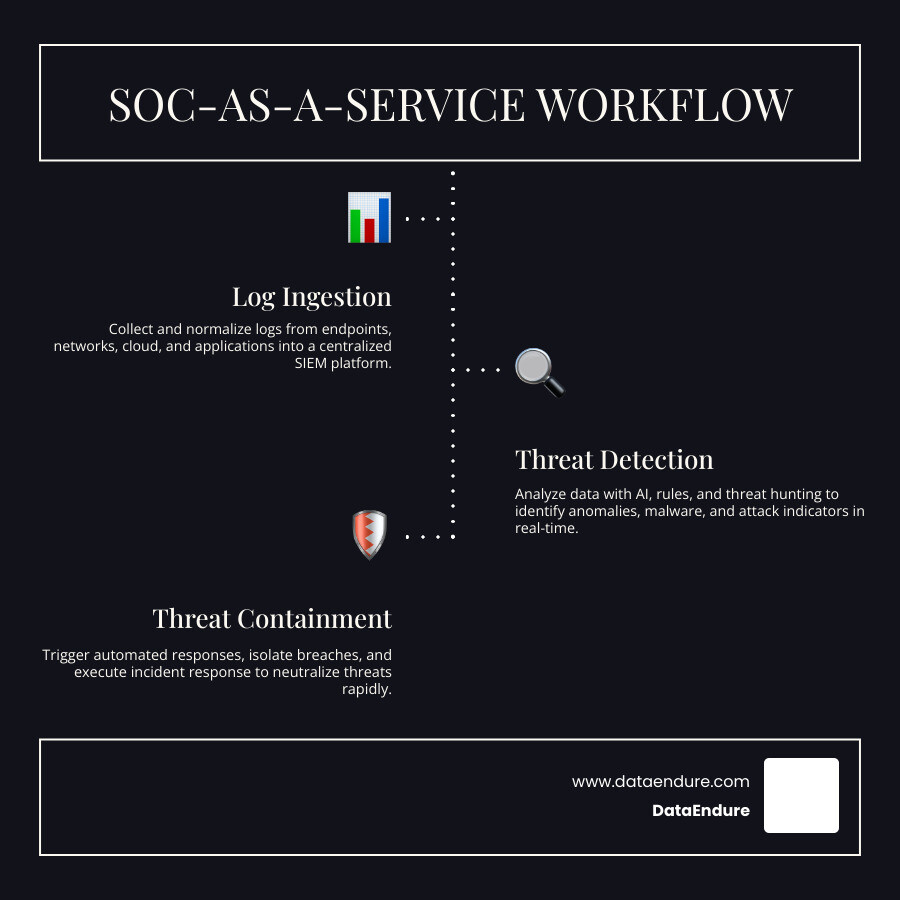
When we talk about a managed soc provider, we are describing a partner that acts as your organization’s eyes and ears across the digital landscape. A Security Operations Center (SOC) isn’t just a room full of screens; it is a centralized function that combines people, processes, and technology to monitor and improve your security posture.
In the environment of Silicon Valley, businesses cannot afford even a few minutes of downtime caused by a breach. A managed provider ensures that 24/7 coverage is a reality, not an aspiration. At DataEndure, our N Soc approach is designed to provide this exact level of vigilance, ensuring that your environment is monitored every second of every day.
Defining SOC vs. MDR vs. In-House Teams
It is easy to get lost in the “alphabet soup” of cybersecurity. Let’s break it down:
- In-House SOC: This is a team you hire, train, and house yourself. It offers the most control but comes with a massive price tag and the constant headache of the cybersecurity workforce shortage.
- MDR (Managed Detection and Response): MDR is often more tool-centric, focusing specifically on detecting threats on endpoints and responding to them. It is a powerful component but sometimes lacks the broad visibility of a full SOC.
- SOC as a Service (SOCaaS): This is a comprehensive outsourcing model. It includes the SIEM (Security Information and Event Management) tools, the expert analysts, and the remediation playbooks. Our SOC as a Service model provides a turn-key solution that integrates with your existing stack to provide a holistic view of your risk.
Why Every Business Needs a Managed SOC Provider
The modern threat landscape is no longer composed of “script kiddies.” We are facing organized, well-funded adversaries who use AI to automate their attacks. Research shows that 60% of organizations feel their staff lacks the training to handle current cybersecurity controls.
For businesses in Santa Clara and the greater Bay Area, the competition for talent is fierce. Hiring a single tier-3 analyst can cost more than an entire year of managed services. By choosing a Security Operations Center Services for Silicon Valley Businesses, you gain instant access to a “global badass” team of experts without the recruitment lag.
Key Benefits of Outsourcing Security Operations
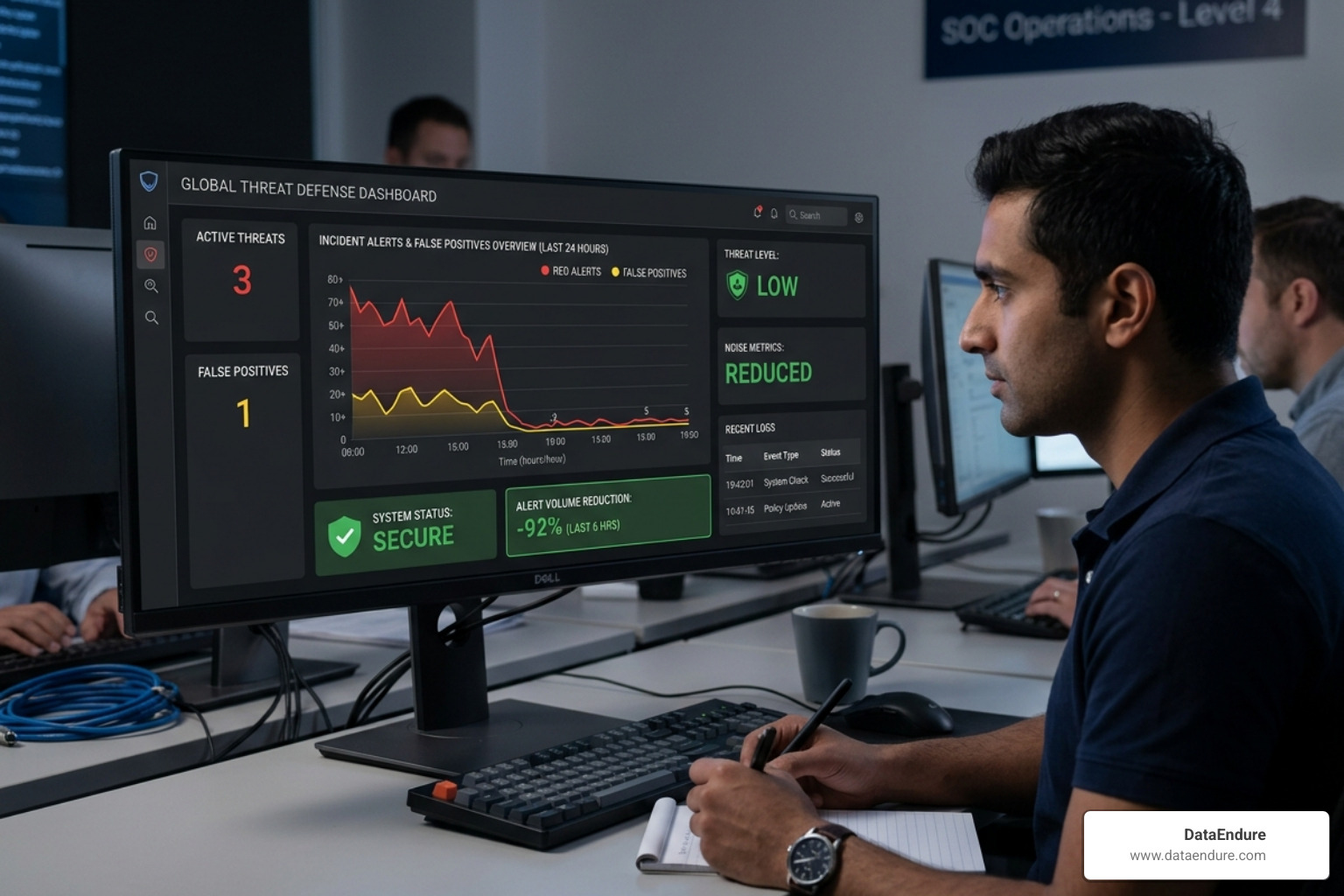
The primary reason our clients move to a managed soc provider is simple: they are tired of the noise. The sheer volume of alerts generated by modern firewalls, EDR tools, and cloud logs is “mammoth.” Without a dedicated team to filter these, critical threats get lost in the shuffle.
By leveraging Managed Security, you shift the burden of “log and flog” (where providers just dump alerts on you) to a model focused on actionable intelligence.
Reducing Alert Fatigue and Improving Accuracy
Alert fatigue is a top challenge for 60% of organizations. When your IT team receives 500 alerts a day, they start ignoring them. This is where a managed soc provider proves its value. For example, some advanced AI-powered SOCs can reduce alert noise by over 90%, and in certain cases, cut false positives by up to 99%.
We recently highlighted this in our Announcing ESCV: DataEndure SOC MDR Service Enhancement, which focuses on using high-fidelity telemetry to ensure that when we alert you, it’s because there is a real problem that needs your attention.
Evaluating the Tech Stack of a Managed SOC Provider
A provider is only as good as the tools they use and how well those tools talk to each other. You want a provider that integrates SIEM, EDR, and XDR into a single “operations fabric.”
| Feature | In-House SOC (Annual Est.) | Managed SOC Provider (Annual Est.) |
|---|---|---|
| Personnel (24/7 coverage) | $600k – $1M+ | Included in subscription |
| Technology Licenses | $100k – $250k | Included or managed |
| Training & Certs | $20k+ | Provider’s responsibility |
| Total Cost | $720k – $1.3M+ | $50k – $200k (Mid-Market) |
As the table shows, the cost-benefit analysis heavily favors the managed model. You aren’t just saving money; you are buying a level of maturity that would take years to build internally.
Performance Metrics and Selection Criteria
How do you know if your managed soc provider is actually doing their job? You look at the metrics. The two most important are:
- MTTD (Mean Time to Detect): How long does a “cockroach” stay in your system before the lights flip on? Top-tier providers achieve an MTTD of under 15 minutes.
- MTTR (Mean Time to Respond/Contain): Once a threat is found, how fast is it stopped? Some services now guarantee containment within 15 minutes of detection.
To learn more about how to measure these successes, check out our SOC-as-a-Service eBook.
Critical Features for Modern Threat Resilience
A modern SOC shouldn’t just wait for an alarm to go off. It should be proactive. Key features to look for include:
- Proactive Threat Hunting: Analysts should be actively searching for signs of adversary tradecraft that haven’t triggered an alert yet.
- MITRE ATT&CK Mapping: Detections should be aligned with this framework so you know exactly what stage an attack is in.
- Automated Containment: If a ransomware strain is detected at 3 AM, the SOC should have the authority to isolate that machine instantly.
When evaluating Managed Security Service Providers (MSSPs) in the Bay Area, you’ll find that the most effective partners emphasize these “human-led, AI-assisted” capabilities.
Onboarding and Deployment Timelines
One of the biggest pitfalls in cybersecurity is the “shelfware” problem—buying a tool that takes six months to set up. A professional managed soc provider should have you up and running in 30 days or less.
Typical Onboarding Steps:
- Inventory & Ingestion: Connecting your logs (Windows, MacOS, Microsoft 365, Azure, etc.) to the SOC platform.
- Baseline Behavior: Monitoring your network for 7–14 days to understand what “normal” looks like for your business.
- Tuning: Adjusting rules to eliminate noise from legitimate internal tools.
- Go-Live: 24/7 monitoring begins with established escalation paths and Slack/Teams integration.
Future Trends in Managed Security
As we move through 2026, the industry is shifting toward “Agentic AI”—AI that doesn’t just flag a problem but can autonomously perform complex investigations. This allows human analysts to focus on high-level strategy while the “bots” handle the tier-1 triage at machine speed.
Cloud-native SOCs are also becoming the standard. They require no on-site hardware and can scale instantly as your company grows. For businesses in Silicon Valley, this flexibility is a non-negotiable requirement.
Compliance and Regulatory Support
Whether you are dealing with SOC 2, HIPAA, GDPR, or the newer NIS2 and DORA regulations, your managed soc provider should be your primary ally. They provide the “paper trail” (logs and reports) necessary to prove to auditors that you are monitoring your environment and responding to incidents according to industry standards.
Frequently Asked Questions
What is the difference between a managed SOC and MDR?
While MDR focuses heavily on detection and response at the endpoint level, a managed SOC provides a broader “command center” view. A SOC ingests data from firewalls, cloud apps, identity providers, and networks to correlate events that a standalone MDR tool might miss.
How much does a managed SOC provider typically cost?
Pricing varies based on your “telemetry volume” (how much data you produce) or your user count. Generally, for a mid-market company, it ranges from $50,000 to $200,000 annually. Compared to the $1M+ cost of an in-house team, it offers significant ROI.
How quickly can a managed SOC be deployed?
At DataEndure, we pride ourselves on a 30-day deployment. Some cloud-only providers can offer basic monitoring in as little as 48 hours, but a full, tuned integration typically takes 2 to 4 weeks.
Conclusion
Choosing a managed soc provider is one of the most significant steps you can take to mature your security posture. In an era where a single ransomware attack can cost millions in recovery and lost reputation, having a “warm blanket” of 24/7 expert protection isn’t just a luxury—it’s a business necessity.
DataEndure provides the rapid breach detection and skilled expertise you need to stay ahead of modern hackers. We don’t just “log and flog”; we hunt, contain, and remediate.
Ready to see how we can secure your Silicon Valley business? More info about SOC as a Service is just a click away. Let us take the night shift so you can focus on growing your business.