Why 24/7 Breach Monitoring Is No Longer Optional
If you’re evaluating 24/7 breach monitoring services for your organization, here’s a quick comparison of the top service tiers to help you choose:
| Service Type | Best For | Key Capability | Response Speed |
|---|---|---|---|
| Consumer identity protection | Individuals | Email & SSN alerts | Hours to days |
| SMB dark web monitoring | Small teams | Credential leak detection | Near real-time |
| Enterprise breach monitoring | Mid-to-large orgs | Domain-wide, SIEM-integrated | Minutes to hours |
| Managed SOC / MDR | Regulated industries | Full lifecycle response | Under 3 hours |
In 2025, the average US data breach cost hit $10.22 million — an all-time high. And the average organization took 241 days just to identify and contain a breach. That’s eight months of an attacker moving freely through your environment.
The hard truth? Most security tools are reactive. They alert you after damage is done.
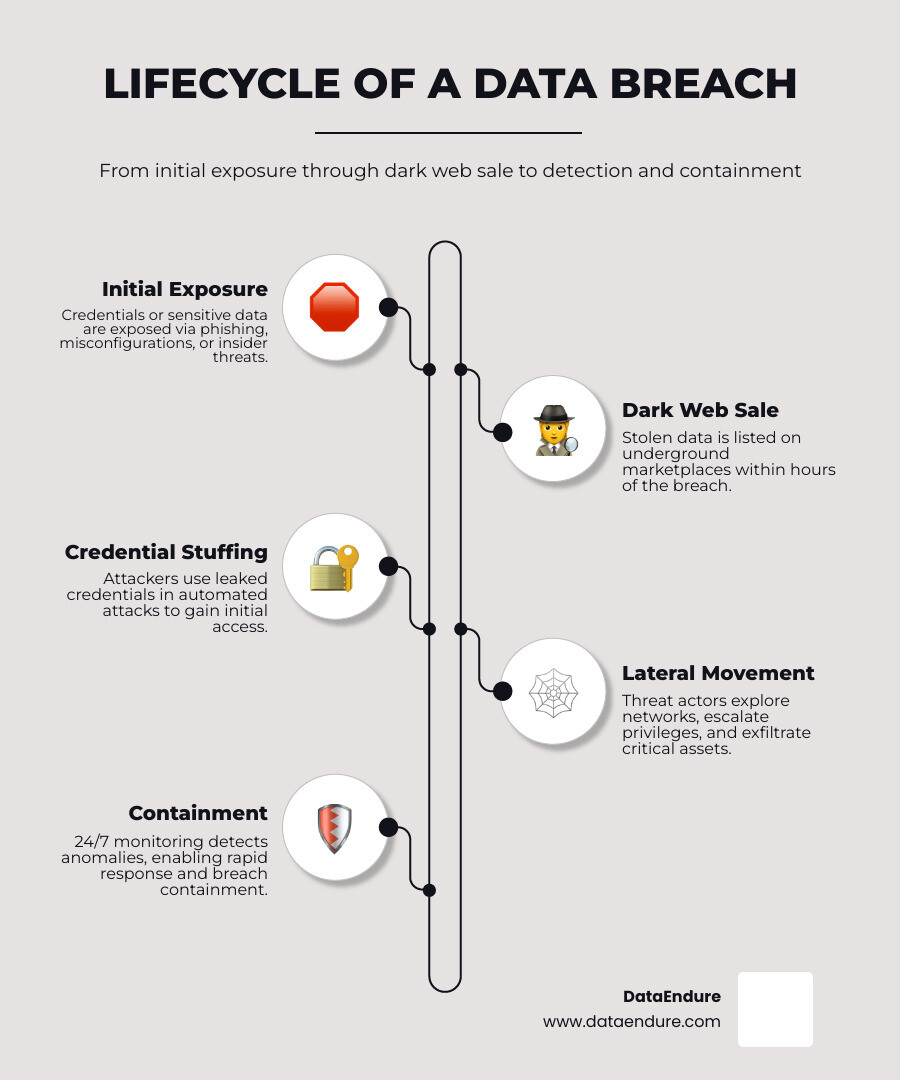
Traditional approaches — point-in-time scans, manual log reviews, siloed security tools — simply can’t keep pace with today’s threat environment. Stolen credentials show up on dark web marketplaces within hours of a breach. By the time a quarterly scan catches it, attackers may have already pivoted deep into your network.
This is the gap that continuous, round-the-clock breach monitoring is built to close.
For IT leaders in regulated industries — already stretched thin by alert fatigue, compliance demands, and staff shortages — the question isn’t whether you need 24/7 monitoring. It’s which service model fits your risk profile, your stack, and your team’s capacity to act on what it finds.
This guide breaks down how these services work, what separates consumer tools from enterprise-grade platforms, and what to look for when comparing your options.
The Strategic Value of 24/7 Breach Monitoring
24/7 breach monitoring is the continuous detection of exposed credentials, leaked company data, suspicious identity activity, and breach evidence across public sources, underground communities, and internal security telemetry. In plain English: it helps organizations find signs of compromise early, so teams can assess and respond before issues escalate.
That matters because waiting for a vendor notification or a user complaint is not a reliable detection strategy.
A mature monitoring program typically works in four steps:
- It watches for exposure across dark web dumps, breach databases, ransomware leak sites, paste sites, and credential markets.
- It correlates those findings with your domains, users, cloud identities, and business systems.
- It prioritizes what matters using severity, exposure timelines, and likely business impact.
- It triggers response actions such as password resets, access reviews, containment, or escalation into incident response.
For lean security teams, the real value is not just visibility. It is operational efficiency. When monitoring is tied to triage, context, and response workflows, teams can reduce noise and focus on exposures that warrant action.
That is why 24/7 breach monitoring works best as part of a broader resilience strategy, not as another standalone dashboard. Monitoring should connect with the rest of your security, data, cloud, network, and infrastructure program so there are fewer blind spots and fewer manual handoffs.
If you want a broader look at always-on detection, our guide to 24×7 security monitoring is a useful next read.
A few numbers explain why this matters:
- The average US data breach cost reached $10.22 million in 2025.
- The average time to identify and contain a breach was 241 days in 2025.
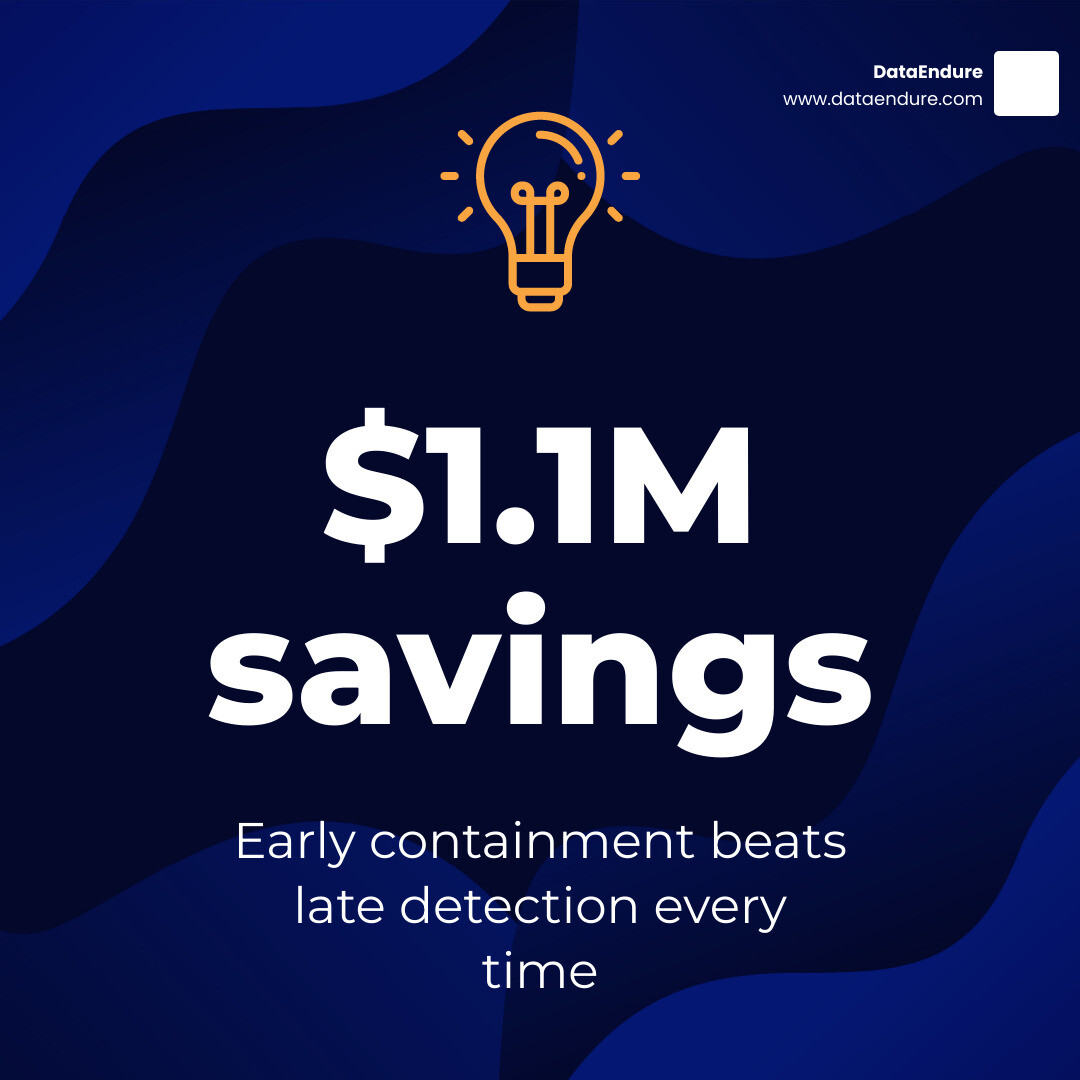
- Early containment reduces breach costs by about $1.1 million.
- Organizations using security AI and automation save an average of $1.9 million per breach.
- 66% of consumers say they would not trust a company after a breach.
So the case is not just technical. It is financial, operational, and reputational.
How 24/7 Breach Monitoring Supports Ransomware Risk Reduction
Ransomware often begins with compromised credentials. According to the research, 80% of ransomware incidents begin with compromised credentials. That means breach monitoring is not just about finding leaked emails and passwords. It can also help reduce one of the more common paths to encryption, extortion, and downtime.
Here is how continuous monitoring helps:
- Detects exposed employee credentials before they are used for VPN, email, or SaaS access
- Flags reused passwords that increase credential stuffing risk
- Surfaces stolen session tokens and identity artifacts where available
- Triggers password resets and account reviews quickly
- Supports MFA enforcement and privileged access checks
- Helps limit the blast radius by identifying early signals sooner
This is especially important for web-facing applications, where 88% of breaches involved stolen or brute-forced credentials. If exposed access is identified early, teams may be able to reduce the likelihood of persistence, lateral movement, or ransomware deployment.
Key Features of 24/7 Breach Monitoring Services
When comparing services, it helps to look beyond the phrase “dark web monitoring.” It can refer to anything from a basic email alert to a fully managed detection and response capability.
Key features to compare include:
- Continuous dark web and breach source scanning
- Human intelligence and analyst validation
- Domain-wide monitoring, not just single email addresses
- Exposure timelines showing when data first appeared
- Impact scoring to prioritize critical users or business systems
- Automated remediation workflows
- API and integration support for SIEM, SOAR, ticketing, and IAM tools
- Coverage across identities, endpoints, cloud, and network telemetry
- Evidence and reporting for audits and investigations
Strong services do not just notify. They also support action.
If your organization is looking for layered operational support, our Managed Security Services approach is one example of how monitoring can be paired with triage and response workflows.
Critical Threats: From Dark Web Dumps to Credential Markets
What does 24/7 breach monitoring actually detect?
Usually, a lot more than just passwords.
Common data and threat types include:
- Corporate and personal email addresses
- Usernames and passwords
- Password hashes
- Session cookies and tokens
- Customer and employee PII
- Financial information
- Internal system or cloud login references
- Malware logs from infostealers
- Third-party vendor breach exposure
- Brand and domain abuse signals tied to phishing or impersonation
This matters because 2025 saw more than 3,332 recorded data compromises in the US alone, up 4% from 2024. The volume of exposed data keeps growing, and attackers are very good at repackaging old leaks into new attacks.
Old breach data is still useful to criminals because:
- People reuse passwords
- Employees forget which accounts used which email aliases
- Attackers combine old PII with fresh phishing lures
- Historical exposure reveals weak spots in identity hygiene
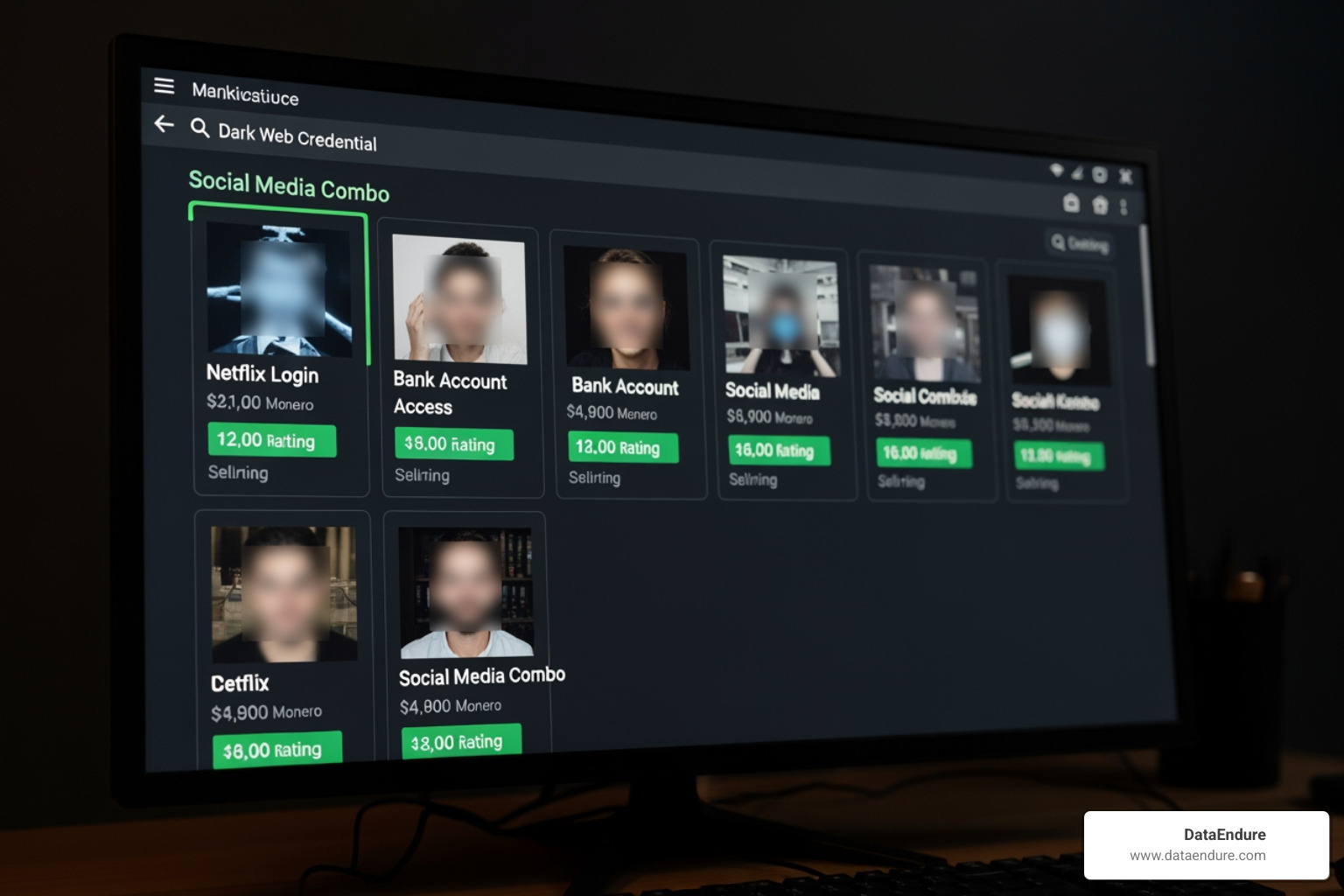
For organizations, the most useful monitoring tools support domain-wide analysis. That means we can see whether one exposed executive email is an isolated issue or part of a broader pattern affecting finance, HR, IT, and contractors.
Some services also support broker removal or data cleanup workflows for consumer records, but businesses should treat that as a secondary benefit. The primary goal is still rapid detection and response.
Detecting Account Takeovers and Identity Theft
Account takeover and identity theft sit at the intersection of breach monitoring and incident response.
For individuals, the risk may involve fraudulent loans, credit abuse, or hijacked email. For enterprises, the same pattern can become payroll fraud, business email compromise, SaaS takeover, or unauthorized cloud access.
Typical attack paths include:
- Credential stuffing using reused passwords
- Brute-force attempts against weak accounts
- MFA fatigue or bypass attempts after credential exposure
- Social engineering based on leaked PII
- Session hijacking using stolen tokens
Monitoring helps by connecting identity exposure to actual defensive action:
- A leaked credential is detected.
- The identity is mapped to a real user, role, and system.
- Risk is scored based on privilege and exposure context.
- Password resets, token revocation, and access reviews are triggered.
- If needed, the event is escalated into broader incident response.
For consumers, follow-on steps may include fraud alerts and credit record freezing. For organizations, the focus is usually identity hardening, log review, and breach containment.
The key is correlation. A leaked password alone is one signal. A leaked password plus suspicious login telemetry plus impossible travel plus admin access? That is a fire, not smoke.
Comparing Enterprise-Grade vs. Consumer Monitoring Models
Not all monitoring services are built for the same problem. Consumer products are usually designed to tell one person if their email, SSN, or card data appears in a breach. Enterprise-grade services are built to protect an organization, coordinate response, and support compliance.
Here is the practical difference:
| Capability | Consumer Monitoring | Enterprise-Grade Monitoring |
|---|---|---|
| Coverage scope | Individual email or identity | Domain-wide users, privileged accounts, vendors |
| Data sources | Public breach data and basic dark web feeds | Broader threat intelligence, analyst review, faster correlation |
| Alerts | Simple notifications | Context-rich alerts with scoring and ownership |
| Automation | Limited | API-first workflows, password reset, ticketing, orchestration |
| Integrations | Minimal | SIEM, SOAR, IAM, ITSM, case management |
| Response support | Self-service guidance | Managed triage, escalation, incident response alignment |
| Compliance value | Low to moderate | High, with evidence and reporting support |
| Best fit | Individuals and families | CISOs, IT directors, regulated teams |
Consumer tools can be useful for personal risk. But they are rarely sufficient for a security leader responsible for hundreds or thousands of users, business apps, cloud environments, and regulatory obligations.
Enterprise services may also be better suited for third-party and supply chain exposure. If your data appears in a vendor breach, continuous monitoring may surface exposure sooner, giving teams more time to rotate credentials, review integrations, and assess downstream risk.
For a full look at how monitoring fits into a broader services model, explore our services.
Scalability and Operational Burden
This is where many comparisons become practical.
A tool may promise nonstop visibility, but if it floods your team with noisy alerts, it can create additional operational burden. Security leaders typically need fewer false positives and clearer next actions.
When evaluating scalability, ask:
- Does the service reduce alert fatigue through analyst triage?
- Can it prioritize critical identities like admins, finance, or executives?
- Does it fit your current tooling instead of adding another silo?
- Can it be implemented quickly, ideally within a 30-day window?
- Does it support a layered, curated architecture instead of tool sprawl?
A useful evaluation lens is outcomes: skilled experts, practical automation, and vendor-agnostic design can help teams improve detection speed without adding unnecessary complexity.
If you are thinking beyond alerts and toward operational maturity, our resources on what a SOC does and why businesses need one and MDR deployment quick wins are worth bookmarking.
Integration, Compliance, and Incident Response Workflows
The best 24/7 breach monitoring programs do not stop at detection. They plug into how your team already works.
That means integrating findings with:
- SIEM for centralized visibility
- SOAR for automated playbooks
- IAM and SSO tools for password resets and access control
- ITSM or ticketing systems for ownership and tracking
- EDR and network tools for correlated investigation
- Case management and forensics workflows for evidence preservation
This integrated model is what turns monitoring into measurable business value. If an exposed credential is detected and the process can automatically open a ticket, notify the asset owner, revoke sessions, force a reset, and preserve related logs, response time can shrink significantly.
This also supports regulatory and audit obligations. Many organizations need to demonstrate not just that they had a security tool, but that they had an operating process.
24/7 breach monitoring can support compliance and risk management by helping organizations:
- Identify exposed regulated data earlier
- Document detection and response actions
- Produce audit-friendly reports for GDPR, HIPAA, SOC 2, and similar frameworks
- Strengthen third-party risk monitoring
- Reduce dwell time and improve incident readiness
- Support legal, HR, and executive decision-making with better evidence
The cost case is strong here too:
- Early containment can reduce breach costs by about $1.1 million.
- Security AI and automation can reduce average breach costs by $1.9 million.
Those are not abstract savings. They can translate into less downtime, less cleanup, fewer emergency projects, and less reputational fallout.
For organizations in Santa Clara and Silicon Valley reviewing broader support options, related local service resources include Network Monitoring & Management Services in Santa Clara, CA, Santa Clara County IT Support & Cybersecurity, Managed IT Services for Bay Area Businesses, San Jose IT Support & Cybersecurity Services | 24/7 Emergency …, California SOCaaS: 24/7 Managed Cybersecurity – InfoSight, Inc., and San Jose Digital Forensics Data Breach Services – Cyber Centaurs.
Rapid Response and Remediation Strategies
Speed matters. The faster teams move from detection to action, the more they may be able to limit incident impact.
High-performing response models usually include:
- Prebuilt playbooks for leaked credentials and third-party breach events
- Tabletop exercises so teams know who does what
- Disposition matrices to identify who is actually affected
- Targeted notification lists instead of broad panic emails
- Digital forensics support when compromise is suspected
- Vendor-agnostic orchestration across your existing stack
Research included examples of after-hours response models resolving a large majority of incidents within the first few hours after notification. That benchmark is useful because breach monitoring delivers more value when paired with timely remediation.
In practice, response speed depends on maturity:
- Consumer alert only: often hours to days
- Enterprise monitoring with automation: often minutes to hours
- Managed SOC or MDR with response support: can move into containment quickly
Frequently Asked Questions
How does 24/7 breach monitoring differ from standard antivirus?
Antivirus focuses mainly on detecting malicious files or behavior on a device. 24/7 breach monitoring looks outward as well as inward. It watches for leaked credentials, exposed data, dark web activity, third-party breach evidence, and identity-based threats that antivirus may never see. In short, antivirus protects endpoints; breach monitoring protects identities, exposure risk, and early warning signals.
Can monitoring services remove my data from the dark web?
Usually, no. Once data is posted and shared in criminal channels, full removal is rarely realistic. What monitoring can do is help us respond fast: reset passwords, revoke tokens, freeze credit where relevant, issue fraud alerts, and harden accounts with MFA. Some consumer-focused services also support data broker removal requests, but that is different from removing criminal breach data from the dark web itself.
What is the average ROI of a 24/7 monitoring solution?
ROI varies by environment, but the broad economics are compelling. Research shows breaches contained early cost about $1.1 million less than those found late, and organizations using security AI and automation save an average of $1.9 million per breach. Add the avoided cost of downtime, incident labor, regulatory exposure, and lost trust, and the case becomes stronger. The biggest ROI usually comes from faster detection, reduced manual effort, and lower breach impact.
How does 24/7 breach monitoring support AI readiness and resilience?
AI readiness is not just about adopting new tools. It is about securing identities, data flows, and operational processes so AI does not introduce new blind spots. Continuous breach monitoring supports AI readiness by detecting exposed credentials, monitoring cloud and SaaS identities, reducing tool sprawl through integrated workflows, and creating the operational discipline needed for resilient AI adoption. In other words, if your identity layer is messy, your AI future will be messy too.
Conclusion
24/7 breach monitoring is an important part of modern cyber resilience.
For CISOs, IT directors, and technical leaders, the goal is not to buy another isolated tool. It is to build a monitoring model that fits your environment, integrates with your workflows, supports compliance, and reduces the burden on your team.
Organizations often benefit from approaches that align defenses across security, data, cloud, network, and infrastructure while avoiding unnecessary complexity. A vendor-agnostic strategy can help reduce blind spots, limit tool sprawl, and improve response outcomes.
Most of all, resilience should enable the business, not slow it down.
If you are ready to strengthen your security posture with a more holistic approach, explore our Governance, Risk, and Compliance services.