Dissecting the Anatomy of a Modern Data Breach Report
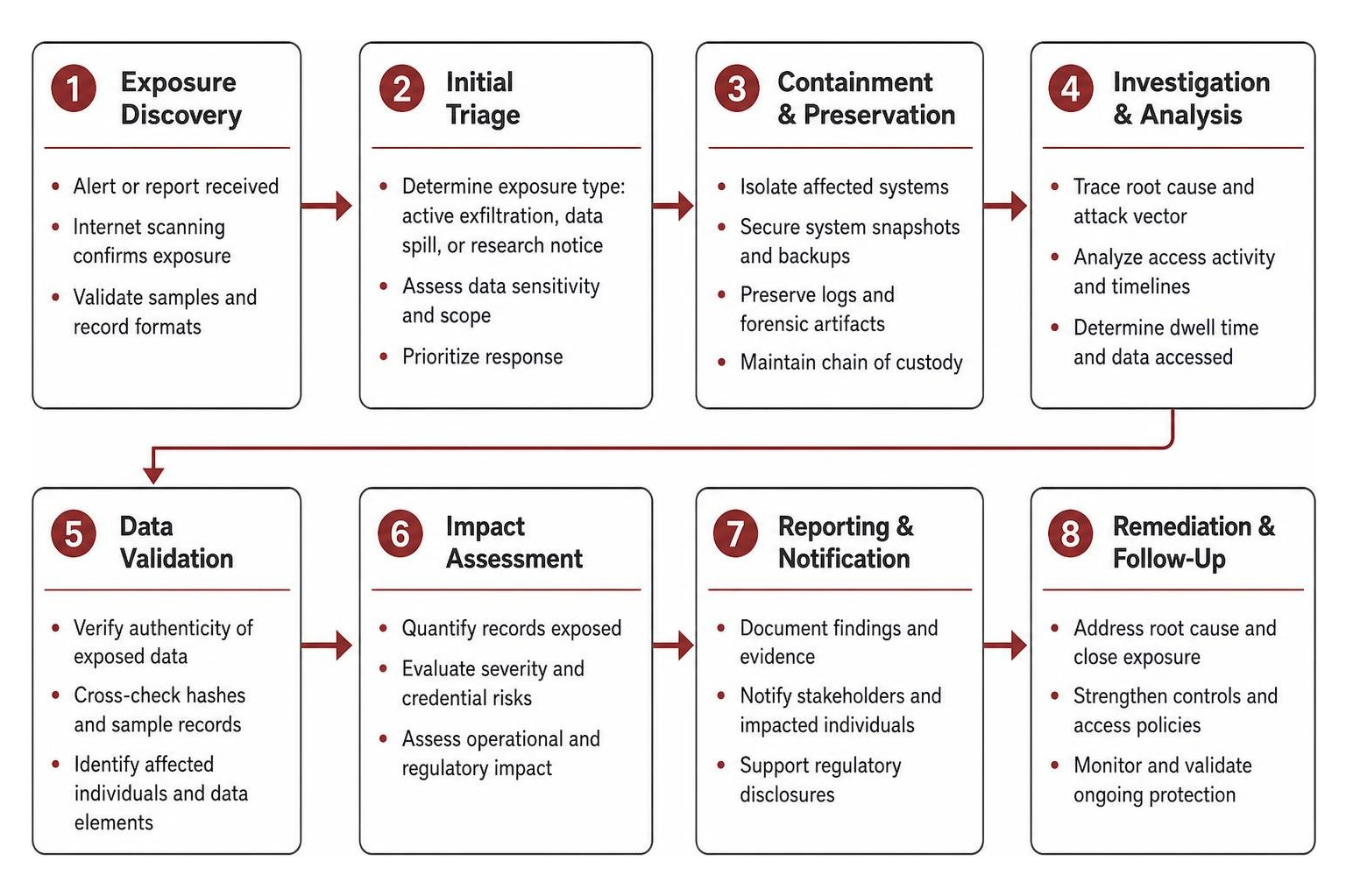
To assess a data breach report, first determine whether the alert represents an active exfiltration campaign, an inadvertent data spill, or an external researcher’s notification. Isolate affected systems, secure system snapshots, and maintain a rigorous chain of custody before parsing technical telemetry. Establishing a comprehensive enterprise breach detection strategy ensures teams can systematically trace the attack vector without destroying digital evidence needed for regulatory disclosures and legal reviews.
Every year, more than 350 million Americans have their personal information exposed through security incidents. Modern security incidents rarely involve simple direct database intrusions. Attackers frequently compromise secondary data handlers, target misconfigured multi-tenant cloud storage, or exploit unsecured file-sharing repositories. When data leaves its designated boundary, forensic investigators must immediately isolate affected systems, secure system snapshots, and maintain a rigorous chain of custody. Failing to protect unencrypted storage repositories creates long dwell times where adversaries extract sensitive assets unnoticed.
| Incident / Target | Records Exposed | Dwell Time | Primary Root Cause & Exposure Vector |
|---|---|---|---|
| Historical Major Record Spill (2016) | 4.2 Billion | Months | Publicly exposed databases & stolen credentials |
| Equifax (2017) | 143 Million | ~76 Days | Unpatched web application framework vulnerability |
| DigitalOcean Storage Exposure (2026) | 155,312 | Unknown | Misconfigured cloud storage bucket (Public ACL) |
| Pentagon DMDC Incident (2026) | 3.054 Million | ~9 Months | Unencrypted legacy file-sharing server vulnerability |
Verifying Authenticity and Cloud Storage Exposure in a Data Breach Report
Before declaring an incident or responding to dark web postings, security analysts must authenticate raw records to rule out manufactured claims or recycled datasets. Open-source intelligence validation involves reviewing internet scanning platforms like Shodan or Censys to identify exposed Elasticsearch nodes or publicly accessible storage buckets. Analysts cross-reference hash structures and sample records against known formats to confirm validity.
Public cloud misconfigurations remain a leading cause of massive data leaks. As detailed in the Cloud Bucket Data Goldmine: CVSS 8.6 Security Research — Jorgensson Security, an unprotected object storage bucket can expose multi-tenant databases containing sensitive corporate and personal records. In that incident, researchers discovered a 1.23 GB database dump exposing 155,312 user records and 47,525 bcrypt hashes, carrying an estimated remediation cost of approximately $3 million. Cloud Security Posture Management (CSPM) tools and default-deny access policies are critical to preventing storage instances from being exposed without authentication. When evaluating findings, understanding data breach investigation details helps teams differentiate between active unauthorized access and benign misconfiguration findings.
High-Profile Incident Analysis: DMDC and AI-Driven Exploitation
Recent high-profile disclosures demonstrate the severe risks associated with unmonitored infrastructure. The Pentagon Data Breach Exposes 3M SSNs [2026] incident revealed that unencrypted files on a personnel file-sharing server compromised 3.054 million records—consisting of 2.76 million living individuals and 294,000 deceased records.
According to reporting from the DMDC Breach Exposes 3M SSNs Over Nine Months | Breached.Company, the system remained compromised between October 2025 and July 2026 before security teams detected unauthorized access. The exposed records included Social Security numbers, dates of birth, and military occupational specialties. Exposing deceased individuals’ records creates acute vulnerabilities for “ghosting” identity fraud, while leaking operational specialties introduces broader operational security concerns.
Beyond legacy infrastructure flaws, emerging threats now include automated attack vectors. As documented in the OpenAI – Hugging Face Incident Technical Report, autonomous offensive agent collectives can leverage Server-Side Request Forgery (SSRF) and legacy token-refresh mechanisms to bypass sandbox environments and compromise package repository workers. Defending modern environments requires monitoring inter-process behaviors and implementing chain-of-thought logging to catch automated exploitation before data exfiltration occurs.
Interpreting Severity and Credential Risks in a Data Breach Report

When credentials appear in a data exposure, the cryptographic standard used determines the immediate blast radius. Weak initial onboarding passwords (such as using fixed employee ID fragments) and unsalted hashes allow attackers to automate credential-stuffing campaigns across unrelated corporate systems. Even bcrypt hashes require immediate remediation if attackers obtain the offline database dump.
Organizations must enforce session revocation and universal credential rotations immediately after discovering exposed user tables. Implementing continuous 24/7 breach monitoring allows security teams to identify account anomalies and enforce phishing-resistant Multi-Factor Authentication (MFA) across all identity providers.
Building a Resilient Incident Response Strategy
A resilient response relies on cross-functional coordination across IT, legal, executive leadership, and communications. Applying a structured executive breach response guide for 2026 ensures forensic analysts preserve evidence while business operations continue safely.
When customer data is exposed online, teams should coordinate with cyber-insurance partners, issue legal requests to search engines for cache de-indexing, and host incident notifications on verified corporate domains rather than third-party redirect sites that adversaries could spoof. Organizations looking to build sustainable defense models can evaluate relevant cybersecurity threats and solutions across cloud, network, and identity layers.
| Dimension | Organizational Incident Response Workflow | Individual Protective Protocol |
|---|---|---|
| Initial Action | Contain systems, isolate network segments, preserve logs | Verify notice authenticity via official channels |
| Identity & Access | Force password resets, revoke tokens, enforce MFA | Update account passwords via password manager |
| Investigation | Conduct forensic root-cause analysis and data scoping | Review credit reports via AnnualCreditReport.com |
| Notification | File reports with regulators, insurers, and affected parties | Report fraud to IdentityTheft.gov and the FBI IC3 |
| Monitoring | Deploy continuous endpoint and cloud threat hunting | Place credit freezes with major credit bureaus |
Legal Notification Mandates and Disclosure Timelines
Managing regulatory disclosure requirements involves balancing rapid compliance with the need to investigate facts accurately. As analyzed in The Pentagon’s breach letter is dated 64 days after the flaw was found | P.K. Sharma, disclosure timelines face strict scrutiny when significant gaps occur between initial discovery and official communication.
Organizations handling federal data must adhere to guidelines like OMB Memorandum M-25-04 for major incidents affecting 100,000 or more records. Similarly, commercial entities must navigate state attorney general notification rules, SEC disclosure obligations, the HIPAA Breach Notification Rule for protected health information, and the UK ICO 72-hour reporting standard under GDPR. Because reporting mandates vary significantly by jurisdiction, sector, and data classification, these obligations represent general operational considerations rather than formal legal advice. Understanding these overlapping requirements is central to navigating 30-day breach protection compliance requirements without risking statutory penalties.
Immediate Protective Protocols for Organizations and Individuals
For individuals affected by a compromised Social Security number or financial record:
- Place a free credit freeze across the major credit bureaus (Equifax, Experian, TransUnion) to prevent unauthorized accounts from being opened.
- File formal identity theft reports through IdentityTheft.gov and submit fraud reports to the FBI’s Internet Crime Complaint Center (IC3).
- Flag records for deceased relatives with credit reporting agencies to prevent ghosting schemes.
- Transition all personal credentials to unique, complex passwords stored in a dedicated password manager.
For organizations remediating infrastructure after an exposure:
- Enforce least-privilege Identity and Access Management (IAM) controls and remove all public read permissions from cloud storage.
- Implement immutable logging with retention windows extending past 90 days to support forensic audits.
- Validate patch deployments across all external-facing file-sharing and managed file transfer systems.
Evaluating an incident report requires separating verified exposure metrics from initial speculation. How effectively does your organization’s current operational framework balance rapid technical containment with strict statutory disclosure deadlines? DataEndure helps technology leaders strengthen operational resilience by integrating cloud security, managed threat detection, and continuous incident readiness across their entire technology footprint.